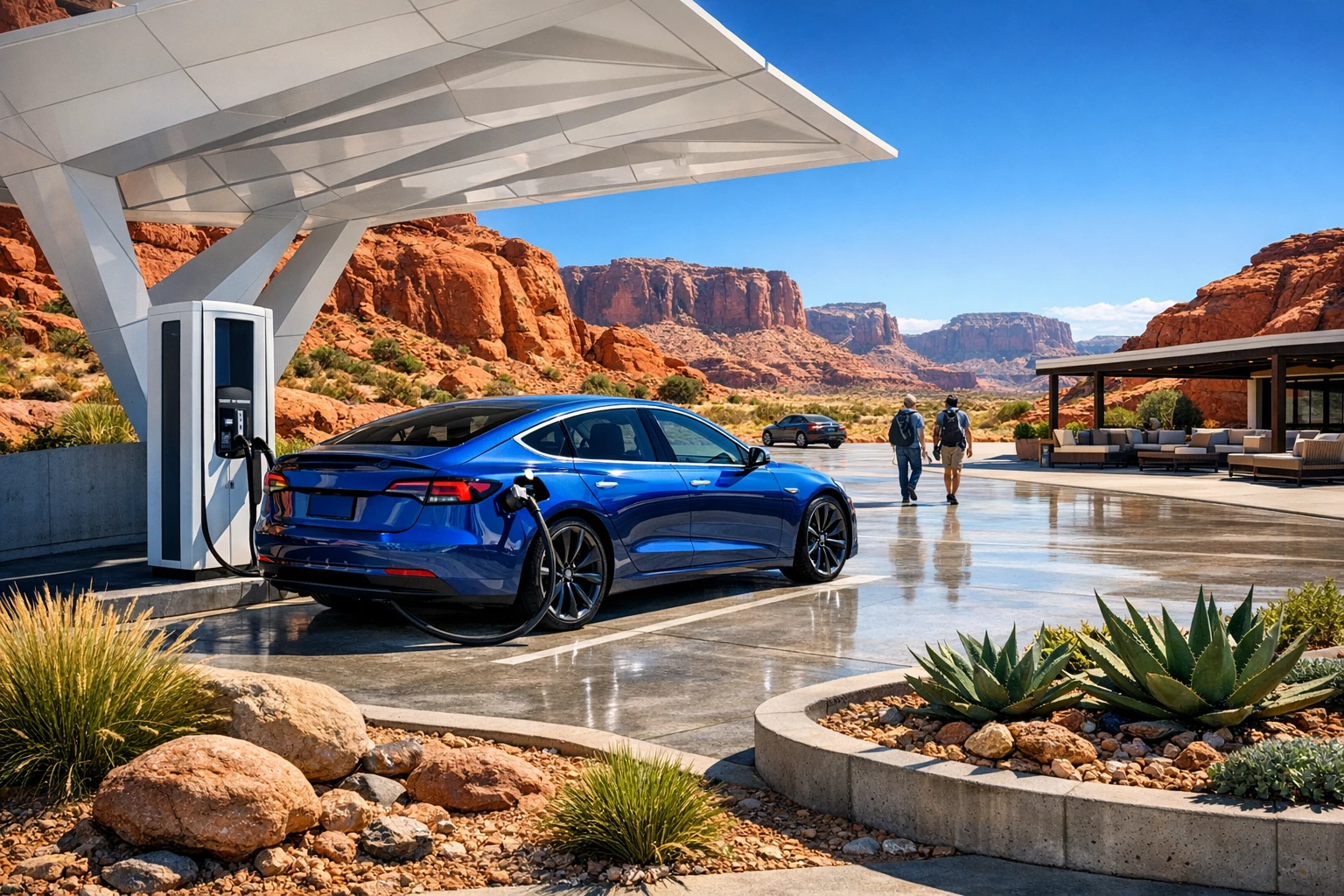
Understanding the Cost to Charge an Electric Car
Charging an electric car sounds simple until the bill starts hiding in the details. Electricity rates shift by city and utility plan, charging speed changes pricing, and everyday habits can move your monthly total more than many drivers expect. For shoppers comparing an EV with a gasoline vehicle, knowing these numbers turns curiosity into a real budget tool. This article explains the math, the common pricing models, and the practical ways to keep costs under control.
Article Outline
- The basic formula used to estimate EV charging costs
- What home charging usually costs and why utility rates matter
- How public charging prices differ from residential charging
- How EV charging compares with gasoline on a per-mile basis
- Practical ways drivers can reduce charging expenses and plan wisely
The Basic Math Behind EV Charging Costs
At its core, the cost to charge an electric car comes down to one unit: the kilowatt-hour, usually written as kWh. Think of a kWh as the fuel measure for electricity, much like a gallon for gasoline. If your EV battery stores 60 kWh and your electricity rate is $0.16 per kWh, a theoretical full charge from empty to full would cost 60 multiplied by 0.16, which equals $9.60. That sounds refreshingly direct, but real charging is rarely that neat. Most drivers do not drain the battery to zero, few charge to 100 percent every day, and some energy is lost during the charging process.
Charging losses matter more than many newcomers realize. Depending on the car, charger, and weather, you may lose roughly 5 to 15 percent of the electricity drawn from the wall before it becomes usable battery energy. So if you add 36 kWh to the battery, you might actually buy closer to 38 or 40 kWh from the grid. That is why the simple formula is better written this way:
- Cost = electricity used from the grid x price per kWh
- Electricity used from the grid = battery energy added plus charging losses
Here is a practical example. Suppose you own an EV with a 75 kWh battery and you charge from 20 percent to 80 percent. That means you are adding 60 percent of the battery, or 45 kWh. If your home rate is $0.15 per kWh, the direct battery energy would cost $6.75. Add modest charging losses, and the actual bill might land around $7.10 to $7.50. Suddenly the math feels real rather than abstract.
Range efficiency also changes the story. Two electric cars may pay the same price per kWh, yet one travels farther on that energy. A very efficient EV might average 4 miles per kWh, while a larger SUV may get closer to 2.7 to 3.2 miles per kWh. At $0.16 per kWh, a car achieving 4 miles per kWh costs about 4 cents per mile to drive. A heavier EV at 3 miles per kWh costs roughly 5.3 cents per mile. That gap looks small on paper, but over 12,000 miles a year it becomes meaningful.
Once drivers understand battery size, charging losses, and miles per kWh, the subject stops feeling like a mystery. It becomes arithmetic with a few real-world wrinkles, and that is good news, because arithmetic is far easier to plan for than guesswork.
What It Really Costs to Charge at Home
For most EV owners, home charging is where the strongest savings live. Plugging in overnight is not just convenient; it is often the least expensive way to keep an electric car ready for the next day. Residential electricity prices vary widely by region, but many drivers in the United States see rates somewhere between about $0.12 and $0.20 per kWh, while some areas fall below or above that range. This means the same electric car can be notably cheaper to run in one state than in another, even before you consider charger installation costs.
Let us use a simple monthly example. If an EV averages 3.5 miles per kWh and a driver covers 1,000 miles in a month, that driver would need about 286 kWh of battery energy. At $0.15 per kWh, that works out to roughly $42.90 before charging losses. Add a small buffer for inefficiency, and the monthly home charging cost may be closer to $45 to $48. At $0.22 per kWh, the same distance could cost around $63 to $69. The difference is not dramatic enough to erase the appeal of an EV, but it is large enough to matter in a household budget.
Utility pricing plans can make the numbers even more interesting. Many electricity providers offer time-of-use rates, where power is cheaper late at night and more expensive during peak evening hours. If your plan charges $0.10 per kWh overnight and $0.25 during peak times, simply scheduling charging after bedtime can cut the cost substantially.
- Overnight charging often delivers the lowest residential rate
- Smart chargers can automate off-peak charging windows
- Some utilities offer EV-specific plans or rebates
There is also the question of equipment. Level 1 charging uses a standard household outlet and is slow, but the electricity itself is not necessarily more expensive. Level 2 charging requires a dedicated charger and often professional installation, which can cost several hundred to a few thousand dollars depending on your electrical setup. That is an upfront expense rather than an energy cost, but it still belongs in the bigger picture. If a buyer is deciding whether an EV saves money, the charger installation should be included in year-one budgeting.
Home charging rewards routine. The car sits quietly in the driveway, electricity flows while the neighborhood sleeps, and the next morning starts with a fuller battery and a predictable cost. For drivers with access to stable residential rates, this is usually the scenario that makes EV ownership feel financially calm rather than experimental.
Public Charging Costs and Why Fast Charging Is Usually Pricier
Public charging adds flexibility, but it often comes with a higher price tag than charging at home. That is especially true for DC fast charging, the option drivers use on road trips or during busy days when time matters more than squeezing every cent. Public chargers may bill by the kWh, by the minute, by the session, or through a membership model that lowers the posted rate. This variety can make prices harder to compare at a glance, and it is one reason new EV owners sometimes feel that charging is clear in theory but messy in practice.
Public Level 2 chargers are usually cheaper than fast chargers, though they are slower and better suited for places where the car will sit for a while, such as workplaces, hotels, parking garages, or shopping areas. A public Level 2 charger may cost around $0.20 to $0.40 per kWh in many markets. DC fast charging can climb to around $0.35 to $0.65 per kWh, and in some locations it can go even higher. Those are broad ranges rather than universal rates, but they illustrate the basic pattern: convenience and speed usually cost more.
Imagine a 75 kWh electric car arriving at a fast charger with 10 percent battery remaining and charging to 80 percent. That adds 70 percent of the pack, or 52.5 kWh. At $0.45 per kWh, the energy alone costs about $23.63. At $0.60 per kWh, it rises to $31.50, and charging losses or pricing quirks can push it slightly higher. Suddenly the economics look closer to gasoline than they do to a cheap overnight charge at home.
There are other details worth watching:
- Some networks charge idle fees if the car remains plugged in after charging is complete
- Per-minute billing can make slower-charging vehicles pay more for the same energy
- Membership plans may reduce costs for frequent users
- Busy stations in premium locations can be more expensive than suburban or destination chargers
This does not mean public charging is a bad deal. It means it serves a different purpose. Home charging is the daily budget champion; public charging is the flexibility tool that keeps the car useful beyond the driveway. For apartment residents, long-distance travelers, or drivers without dedicated parking, public charging may be essential rather than occasional. In those cases, the total cost of ownership still can be attractive, but the savings margin over gasoline tends to shrink. The fastest charger on a highway is a bit like airport coffee: you are paying not only for the product, but for speed, access, and timing.
EV Charging Cost Versus Gasoline: The Per-Mile Comparison That Matters
When people ask how much it costs to charge an electric car, they are often really asking a broader question: is it cheaper than driving on gasoline? The best way to compare the two is not by looking only at a full battery or a full tank, but by examining cost per mile. That levels the playing field and turns two different energy systems into a straightforward comparison.
Start with an efficient electric car that averages 3.8 miles per kWh. If electricity at home costs $0.15 per kWh, the energy cost per mile is about 3.9 cents. If the same car relies on public fast charging at $0.48 per kWh, the figure jumps to about 12.6 cents per mile. Now compare that with a gasoline car getting 30 miles per gallon when fuel costs $3.50 per gallon. That vehicle costs about 11.7 cents per mile in fuel. A 50 mpg hybrid at the same gas price costs around 7 cents per mile.
That comparison tells an important story. Home-charged EVs often beat gasoline cars clearly on running costs. Fast-charged EVs can still be competitive, but the gap narrows and may disappear depending on local fuel prices, vehicle efficiency, and charger rates. In other words, the answer is not a slogan; it is a scenario.
Real-world conditions add more texture to the numbers:
- Cold weather can reduce range and increase energy use because the battery and cabin both need heating
- High-speed highway driving usually lowers efficiency compared with city driving
- Larger wheels, heavy cargo, and towing raise consumption
- Preconditioning the cabin while plugged in can improve efficiency on the road
Even so, EVs have an advantage that goes beyond raw fuel cost. Their energy pricing is often more stable than gasoline, especially for drivers who charge at home on fixed utility plans. Gas prices can swing quickly from one week to the next, while residential electricity tends to move more slowly. There is also a convenience value that is hard to ignore. Waking up with a charged battery feels different from detouring to a fuel station in bad weather.
Still, smart buyers should avoid one-size-fits-all assumptions. If you can charge at home regularly, an EV often looks very economical. If you depend heavily on premium fast charging, the savings case becomes more modest. The most accurate answer lives in your own driving pattern, not in a headline.
Key Takeaways for Drivers Who Want Lower Charging Costs
If you are shopping for an EV, budgeting for one, or trying to reduce what you already spend, the most useful approach is practical rather than theoretical. Start with your own mileage, your local electricity rates, and the type of charging you expect to use most often. A driver with a garage and a time-of-use utility plan will see a very different monthly total from someone who depends on highway fast chargers several times each week. The car matters, but the charging pattern matters just as much.
There are several reliable ways to keep charging costs in check:
- Prioritize home charging whenever possible, especially during off-peak hours
- Compare utility plans and ask whether your provider offers an EV-specific rate
- Use public fast charging strategically for travel or urgent top-ups rather than routine daily charging
- Drive efficiently by moderating speed, avoiding unnecessary weight, and keeping tires properly inflated
- Check whether your workplace, apartment complex, or local stores provide lower-cost charging options
It is also worth thinking in annual totals instead of isolated charging sessions. A single fast charge may look expensive, but if most of your miles come from cheap overnight charging, the yearly average can still be favorable. Likewise, a low residential rate can make a slightly less efficient EV cheaper to run than a highly efficient one that mostly uses premium public chargers. Cost is a pattern, not a snapshot.
For many drivers, the headline conclusion is encouraging. Charging an electric car at home is often meaningfully cheaper than buying gasoline for a conventional vehicle, especially for commuters and households with predictable routines. Public charging reduces some of that advantage, yet it also adds freedom and extends the usefulness of EV ownership. The balance between those two realities is where most real-life budgets are built.
So what should the target reader take away from all this? If you are considering an electric car, do not stop at the purchase price or the advertised range. Look at your electricity rate, estimate your miles per month, and decide where you will charge most of the time. Once you do that, the cost to charge an electric car stops feeling like a moving target and starts looking like something you can plan, compare, and manage with confidence.