How to Choose the Right Metal Garage Kit for Your Needs
Metal garage kits have become a practical answer for homeowners, hobbyists, and small businesses that need durable covered space without committing to a full custom build. The right kit can protect vehicles, tools, equipment, and seasonal storage while keeping construction time more predictable. Yet size, steel gauge, roof style, local codes, and total installed cost can vary widely. Knowing what to compare before you buy helps you avoid expensive surprises and choose a structure that truly fits the way you live and work.
Outline: • Why metal garage kits remain popular • The specifications that matter most before ordering • The best kit styles for different buyers and use cases • Budgeting for foundations, permits, insulation, and labor • A practical conclusion for choosing confidently
Understanding What Makes a Metal Garage Kit Worth Buying
A metal garage kit is not just a pile of panels and bolts. At its best, it is a carefully matched package of framing components, roof and wall panels, trim pieces, fasteners, anchors, and opening options designed to create enclosed space faster than a conventional stick-built project. Many buyers are drawn to these kits because they offer a combination of durability, speed, and flexibility that is hard to ignore. If a traditional detached garage is a hand-tailored suit, a well-engineered steel package is more like a high-quality work jacket: practical, tough, and built for years of use.
One major reason these systems remain popular is material performance. Steel does not attract termites, it will not rot like untreated wood, and it is non-combustible. For owners in wet or humid climates, that alone can make a serious difference in long-term maintenance. Many modern panels are galvanized or coated to improve corrosion resistance, and painted finishes can hold up well when the structure is installed correctly and the site drains properly. Compared with wood framing, a steel structure can also be less vulnerable to warping caused by moisture and temperature swings.
Still, not every building package is equally strong or equally suitable. Basic entry-level models often use lighter panels and simpler framing. More robust kits may include heavier-gauge steel, tighter engineering tolerances, improved bracing, and certified plans for wind and snow loads. That is why the word best has to be defined by the buyer’s real needs. The best option for one compact sedan and a lawn tractor is very different from the best option for a diesel truck, a woodworking bench, and a stack of winter tires.
It also helps to know what may or may not be included. A kit often covers the shell, but buyers frequently need to confirm whether the package includes: • Roll-up or sectional garage doors • Walk-in doors and windows • Anchors for a slab, gravel base, or asphalt • Engineer-stamped drawings • Insulation, vapor barriers, or ridge vents • Delivery and installation
This is where smart shopping begins. A lower advertised price can look attractive, but a bargain shell without code-ready engineering or the right door openings may not be a bargain after all. In other words, the best metal garage kit is not simply the cheapest box on the screen. It is the one that balances structural reliability, practical space, climate suitability, and total project cost.
The Specifications That Matter Most Before You Order
When comparing metal garage kits, dimensions should be your first serious checkpoint. Many buyers focus only on width and length, yet height and door clearance are often the details that decide whether the building feels useful or frustrating. A single pickup truck with a roof rack, for example, can quickly expose the limits of a low sidewall. A garage meant for hobby use may also need extra room for shelving, a compressor, bicycles, or a worktable. A structure that looks generous on paper can feel cramped once the first vehicle is parked inside.
For that reason, it helps to think in zones rather than simple square footage. Consider the footprint needed for parking, the swing or track path of the door, walking clearance, storage depth along the walls, and future expansion of your hobbies or equipment. Typical residential sizes vary widely. A very compact single-vehicle building might start around 12x20 feet, while a more comfortable one-car setup often lands closer to 18x20 or 20x20. For two vehicles, 24x24 is a common benchmark, and 24x30 or 30x30 gives more breathing room for benches or storage.
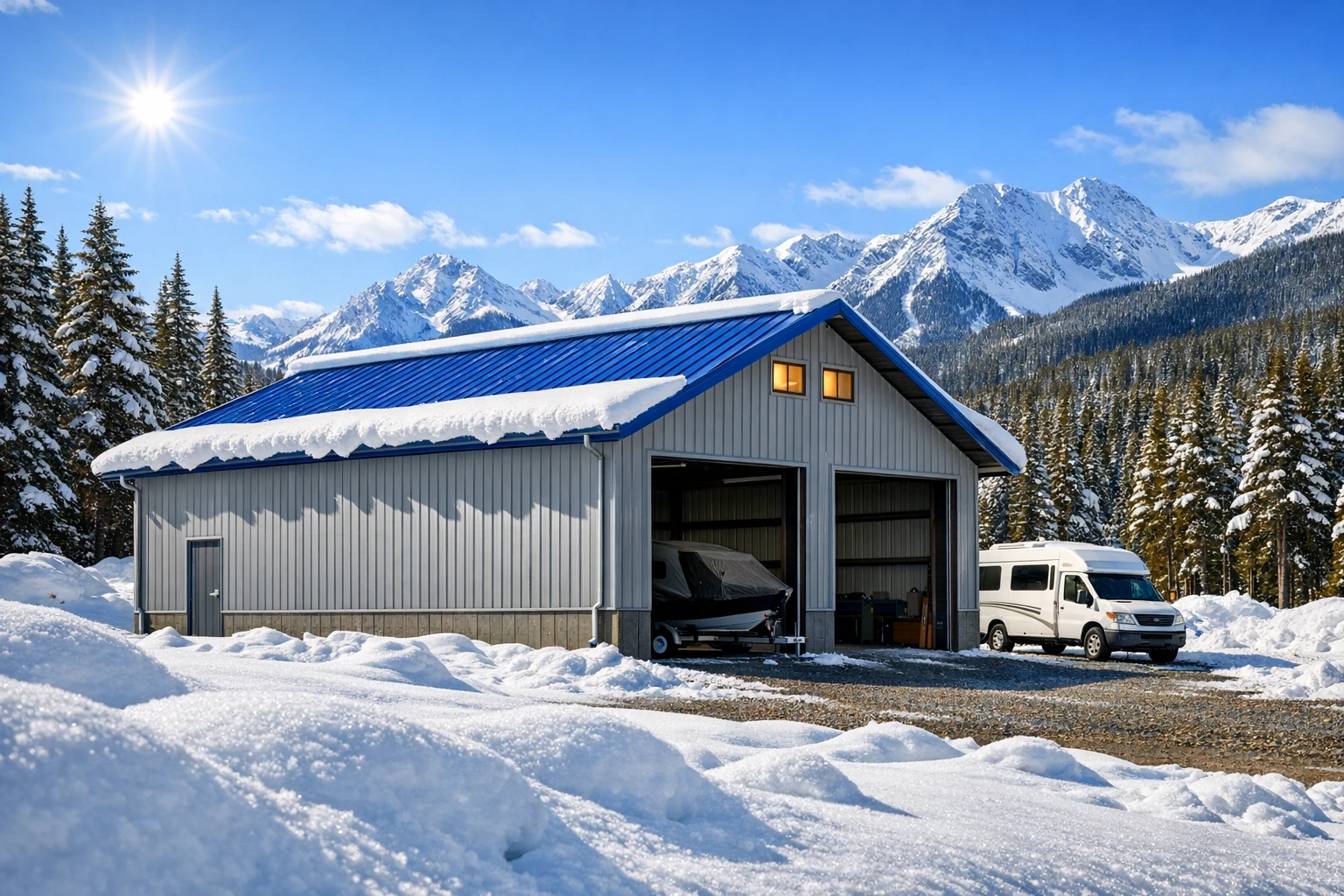
Roof design matters as well. Regular or rounded roofs can cost less, but boxed-eave and especially vertical-roof systems usually handle rain, leaves, and snow more effectively because water and debris shed along the panel ribs. In snowy climates, vertical roofs are often the safer long-term choice. They may cost more at purchase, but that extra spending can make maintenance easier and reduce performance concerns during harsh weather.
You should also compare steel thickness and framing style carefully. On the panel side, 29-gauge steel is common in economical residential packages, while 26-gauge panels are thicker and often preferred for buyers who want a more robust feel. On the frame side, some garage kits use lighter steel tubing, while others use heavier 12-gauge or 14-gauge members, or even rigid-frame red-iron style construction for larger buildings. Heavier does not automatically mean better for every site, but matching the frame to local loads is essential.
Before placing an order, confirm this checklist: • Local permit requirements and zoning setbacks • Wind and snow load ratings for your county • Whether stamped engineering drawings are available • Foundation or anchoring requirements • Door width, height, and opener compatibility • Ventilation options to reduce heat and condensation • Warranty terms for both panels and frame
This is the stage where patient buyers save money. Comparing these details early prevents expensive changes later, and it keeps the project grounded in function rather than glossy product photos.
Best Metal Garage Kit Types for Common Needs
The phrase best metal garage kits makes the most sense when it is tied to real use cases. Instead of chasing a one-size-fits-all winner, it is smarter to match a building type to the way the space will be used every week. A homeowner protecting one car from sun and hail has very different priorities from a collector storing two vehicles, a landscaper housing tools, or an RV owner who needs serious clearance. Once you sort buyers into categories, the strongest options become much easier to identify.
For basic residential protection, a compact enclosed one-car kit is often the best value. These models work well for suburban lots, smaller budgets, and buyers who simply want sheltered parking plus a little wall storage. A vertical roof is usually worth considering even on smaller buildings, especially in areas with frequent rain. If the budget allows, adding one walk-in door and a modest window package can make the structure far more usable than a dark, sealed box.
For families with two daily drivers, a true two-car garage kit is typically the most practical choice. A 20x20 building may fit two vehicles in theory, but many owners find it tight. A 24x24 or 24x30 layout often performs better because it improves door opening clearance, gives more maneuvering room, and leaves space for seasonal items. In this category, the best kits often include stronger framing, better bracing, and wider overhead door options because daily use puts more demand on the structure.
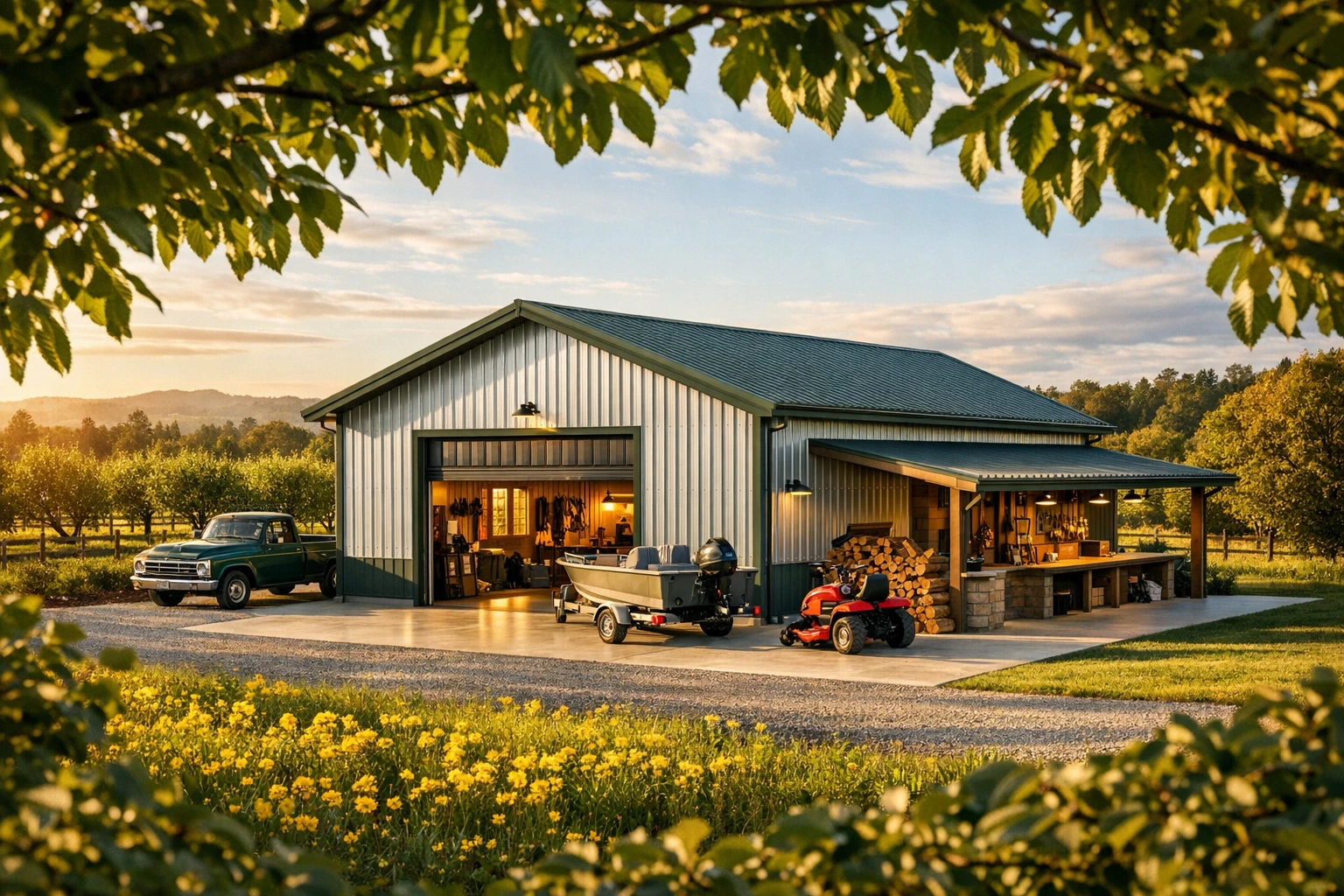
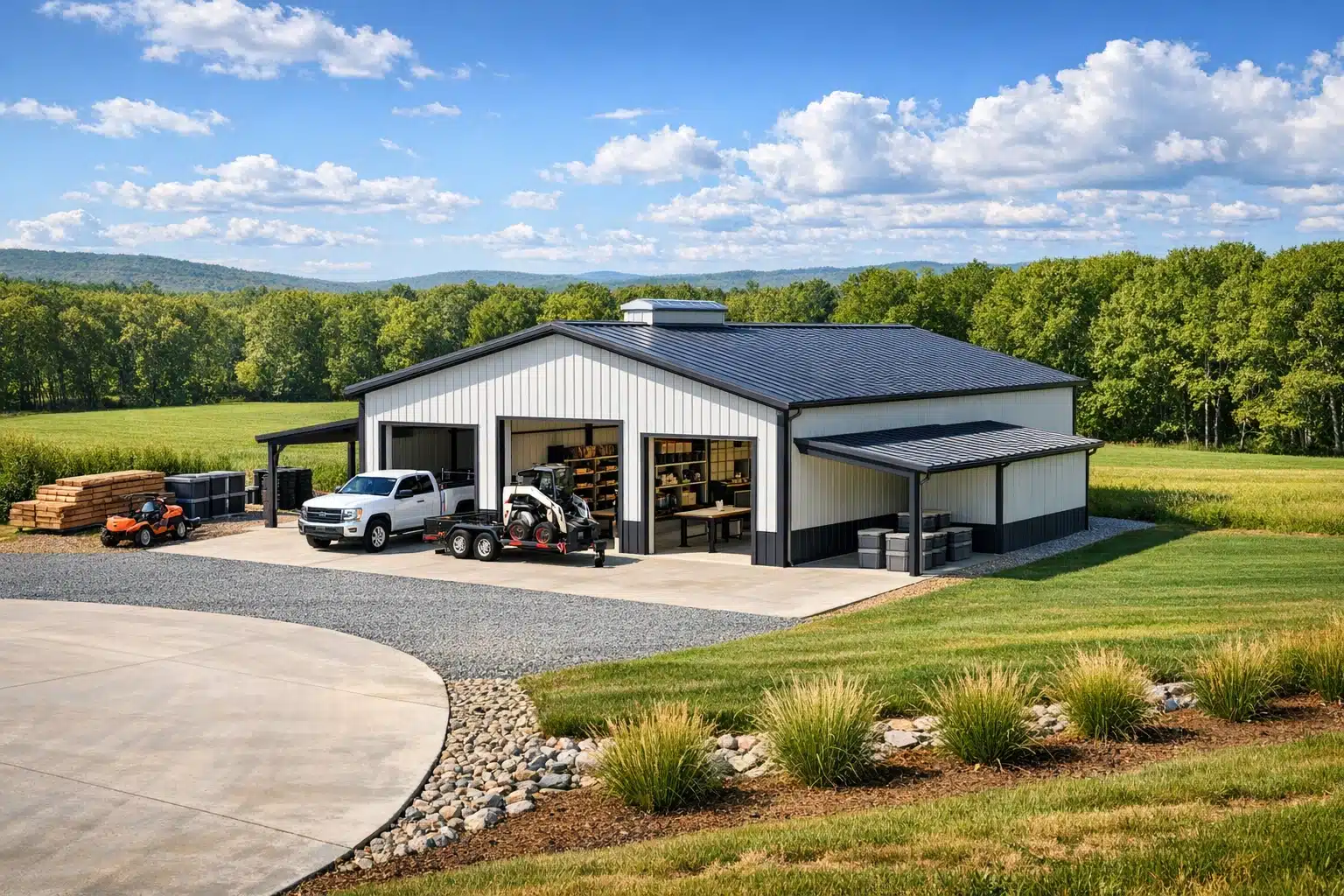
Workshop-focused buyers should look beyond parking dimensions entirely. If the building will hold a bench, shelving, lawn equipment, motorcycles, or fabrication tools, a deeper layout such as 24x30, 30x30, or 30x40 can be a smarter fit. Extra height also becomes useful for lighting, wall cabinets, loft storage, or lifting equipment. These buyers often benefit from: • Higher sidewalls for flexibility • More windows or translucent panels for daylight • Ridge vents or gable vents for airflow • Insulation-ready framing • Reinforced door openings for frequent access
For RVs, boats, and taller equipment, vertical clearance is the deciding factor. The best kits in this segment usually feature a vertical roof, taller legs, and oversized openings. A bargain building that is one foot too short is not a bargain; it is an expensive lesson with a tape measure attached. Similarly, buyers who want mixed-use space often do well with a combo layout that places a vehicle bay beside enclosed storage or a workshop zone. That arrangement can keep messy tools away from finished vehicles while still using one structure.
In short, the best kit is the one that aligns with your routine. Think less about abstract rankings and more about parking habits, climate, access, storage, and whether the building will still serve you five or ten years from now.
Budgeting Beyond the Kit Price: Foundations, Labor, and Long-Term Costs
A metal garage kit can look refreshingly affordable in an advertisement, but the total project budget nearly always extends beyond the shell price. This is where many buyers stumble. The listed package may cover the structure itself, yet the finished cost also depends on site preparation, foundation work, delivery, labor, permits, and optional upgrades. Put simply, the building is only one line in the spreadsheet, not the whole story.
Foundation planning is usually the first major variable. Some smaller structures can be installed on prepared gravel or other approved base systems, but fully enclosed garages are often strongest and most convenient when placed on a properly designed concrete slab. A slab improves anchoring, creates a clean working surface, and supports vehicle traffic more comfortably. It also gives you a better platform if you plan to add insulation, cabinetry, lifts, or interior finishing later. However, concrete adds meaningful cost, and local frost depth, drainage, and reinforcement needs can change the number considerably.
Labor is another key factor. Some buyers handle assembly with their own crew, especially for simpler kits, but many prefer professional installers. That choice can be wise because correct alignment, anchoring, flashing, and fastener placement affect both durability and warranty protection. Poor installation can lead to leaks, rattling panels, or premature wear even when the kit itself is solid. Saving on labor up front is not always saving overall.
Common budget items include: • Site clearing and grading • Gravel base or concrete slab • Delivery fees • Permit and inspection costs • Professional installation • Garage doors and automatic openers • Insulation and moisture control • Electrical service, outlets, and lighting • Gutters, trim upgrades, or custom colors
Operating costs matter too. One advantage of steel is relatively low routine maintenance, but that does not mean zero upkeep. Buyers should still monitor fasteners, sealants, surface scratches, and drainage around the perimeter. In cold or humid areas, condensation management deserves special attention. Without insulation, ventilation, or a vapor strategy, the inside of a garage can become uncomfortably hot, damp, or both. A cheap shell that sweats in winter and bakes in summer can turn into a frustrating workspace.
As a broad rule, basic enclosed kits may start in the low thousands, while larger, code-certified, workshop-capable buildings can move well into the five-figure range before slab and labor are added. That is why the smartest comparison is not cheapest kit versus most expensive kit. It is total cost versus total usefulness over the years you plan to own it.
Conclusion: Choosing a Garage Kit That Fits the Way You Live
If you are a homeowner, hobbyist, or small business buyer trying to sort through metal garage kits, the most useful mindset is simple: buy for the job the building must perform, not just for the price tag that catches your eye. Start with the vehicles, equipment, and storage you need to protect today. Then add realistic clearance for doors, movement, shelves, and future growth. A garage should feel like relief when you open it, not like a daily puzzle where every inch must be negotiated.
The strongest buying decisions usually come from five practical questions. First, how much covered space do you truly need, including walk-around room? Second, what weather loads must the structure handle in your region? Third, which roof style and framing system make sense for that climate? Fourth, what does the full project cost once slab, permits, labor, and upgrades are included? Fifth, will the space still work if your needs change in a few years?
For many buyers, a smart shortlist looks like this: • Choose vertical roof designs for better drainage and broader climate performance • Size up rather than down if you expect storage or workshop use • Verify engineering and local code compatibility before paying a deposit • Compare included features, not just headline pricing • Budget for condensation control, lighting, and access doors from the start
It is also worth avoiding a few common mistakes. Do not assume all steel gauges are equal. Do not overlook sidewall height. Do not treat delivery and installation as afterthoughts. And do not believe that a kit labeled heavy duty automatically meets your county’s structural requirements. Marketing can be loud; specifications are what keep the roof where it belongs when the weather turns ugly.
Ultimately, the right metal garage kit is the one that serves your everyday routine with the least friction. For a family, that may mean dependable parking and organized storage. For a hobbyist, it may mean a bright workshop that keeps tools dry and projects moving. For a small operation, it may mean durable space that supports work without the cost of a fully custom building. Choose with those real outcomes in mind, and you are far more likely to end up with a structure that earns its place on your property year after year.