How Faux Stone Panels Enhance Exterior Aesthetics
Faux stone panels have become a smart option for homeowners who want the visual depth of masonry without the weight, labor, and cost of full stone construction. They matter because curb appeal often shapes first impressions, resale conversations, and even how finished a house feels from the street. With better manufacturing, modern panels now offer convincing texture, wider color ranges, and faster installation. This article explores how they improve exterior aesthetics, where they work best, and what buyers should weigh before choosing them.
Outline
- What faux stone panels are and how they differ from natural stone and traditional veneer
- How they improve curb appeal through texture, scale, color, and targeted placement
- Installation, maintenance, and cost comparisons for practical decision-making
- Durability, weather performance, and long-term appearance outdoors
- A final guide for homeowners, renovators, and builders deciding whether faux stone fits their project
What Faux Stone Panels Are and Why They Matter on Exterior Walls
Faux stone panels are exterior cladding products designed to mimic the look of quarried stone while using lighter manufactured materials. Most are made from high-density polyurethane, polypropylene, or composite blends, and many are molded from real stone surfaces to capture irregular edges, grooves, and shadow lines. That molding process is a major reason today’s products look more believable than older imitations. From a distance, and sometimes even up close, a well-made panel can give a home the grounded, textured character people associate with masonry.
For exterior use, these panels typically come in large interlocking sections rather than individual stones. That format changes the building experience in practical ways. A natural stone or adhered stone veneer installation often requires masonry skill, mortar work, careful placement, and significantly more time. Faux panels, by contrast, are commonly fastened mechanically over a prepared wall surface. Many products also include matching corner pieces, trim accessories, and color systems meant to hide seams. The result is a faster route to an upgraded façade.
The differences become clearer when weight and installation demands are compared. Natural stone veneer can weigh many times more than faux alternatives, while many faux stone panels fall roughly in the range of 1 to 2.5 pounds per square foot. Real or manufactured masonry products can be substantially heavier, which may affect labor, structural considerations, and transport costs. Lighter weight also means faux stone is often easier to apply on accent areas such as entryways, garage surrounds, porch columns, chimney chases, and foundation skirts.
Style variety is another reason these panels matter aesthetically. Homeowners are not limited to one “fake stone” look. Common profiles include:
- Ledgestone for modern or mountain-inspired homes
- Fieldstone for a more traditional, irregular appearance
- Ashlar patterns for cleaner lines and formal symmetry
- River rock looks for rustic or lodge-style projects
That range allows the material to support different architectural directions instead of forcing one generic visual effect. On a craftsman house, faux stone can strengthen the lower massing and make the exterior feel anchored. On a suburban new build, it can break up large siding expanses and add perceived craftsmanship. On a renovation, it can turn a plain front elevation into something with more dimension and personality.
In short, faux stone panels matter because they translate a high-end visual language into a format that is lighter, faster, and more accessible. They do not replace every benefit of real stone, but they open the door for many projects where natural masonry would be too expensive, too labor-intensive, or simply too heavy for the intended application.
How Faux Stone Panels Improve Curb Appeal and Exterior Design
The strongest design advantage of faux stone panels is not merely that they resemble stone, but that they change how a house reads from the street. Flat exteriors can appear unfinished, especially when large siding or stucco areas dominate the front façade. Stone, even in manufactured form, introduces visual depth. It creates small shadows, uneven edges, and tonal shifts that make the wall surface feel richer. That texture matters because exterior beauty is often built on contrast: smooth siding next to rough stone, clean trim against rugged faces, or broad painted planes grounded by darker material at the base.
Faux stone also helps with proportion. Many homes benefit when heavier-looking materials are placed lower on the building, where they visually “hold” the structure. This is why foundation skirts, porch bases, and column wraps are so popular. Stone at the bottom gives a house a settled, substantial feeling, almost as if it belongs more confidently to the landscape. It is the architectural equivalent of wearing good shoes with a simple outfit; the overall impression sharpens immediately.
Placement is where good design separates itself from random decoration. Faux stone panels work best when used intentionally, not scattered without rhythm. Effective applications often include:
- Framing the main entrance to create a stronger focal point
- Adding weight to front-facing garage walls that feel oversized
- Wrapping porch columns to introduce detail without major reconstruction
- Covering exposed foundation areas for a cleaner transition to the ground
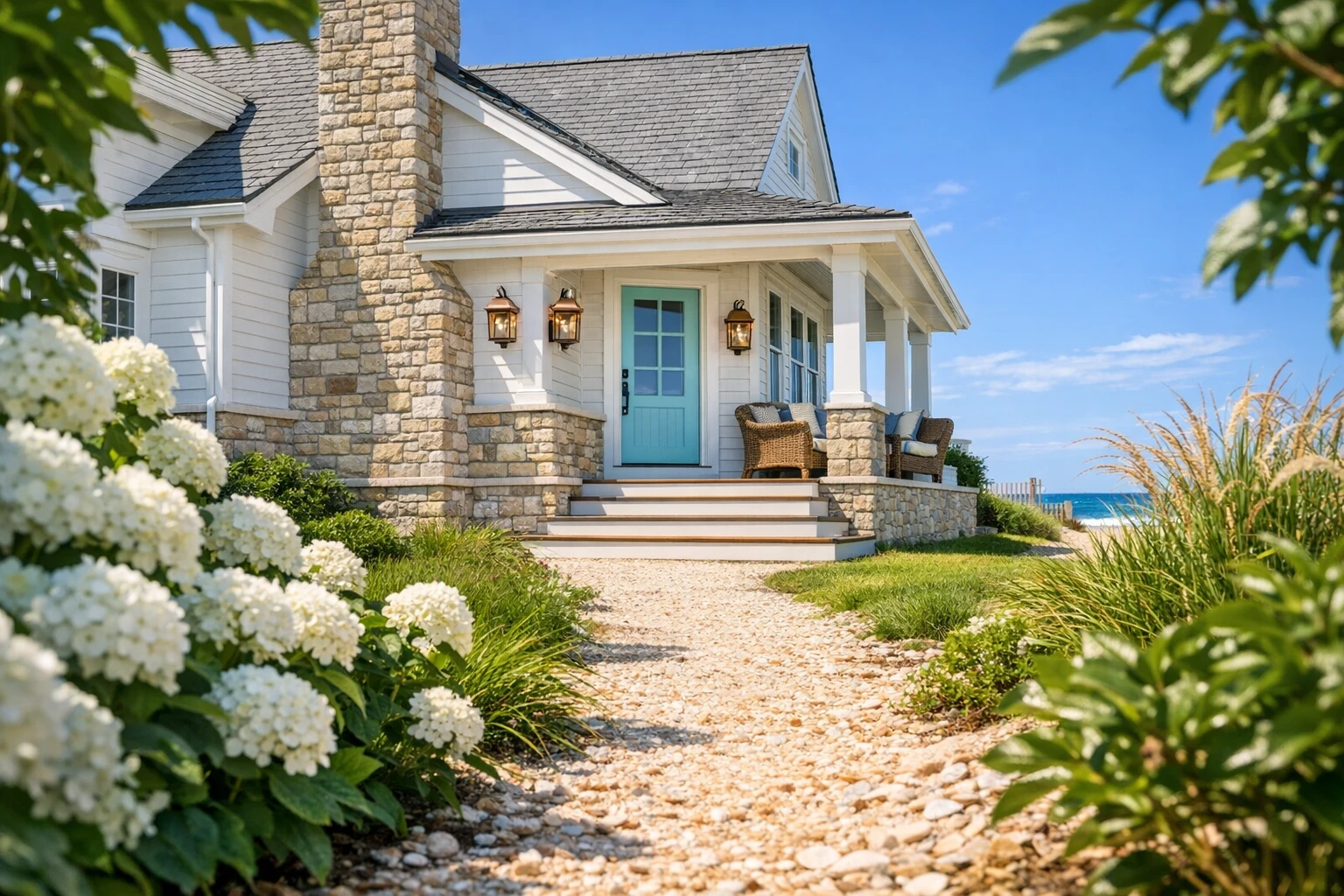
- Highlighting gables or chimney sections on rustic and cottage-style homes
Color selection plays a decisive role too. Warm beige and brown blends can soften newer construction and pair well with cream trim, bronze fixtures, and earthy roof tones. Gray palettes tend to suit modern farmhouse, transitional, and contemporary exteriors, especially when combined with black windows or white board-and-batten siding. Mixed-tone panels usually look more natural than single-flat colors because real stone rarely appears perfectly uniform. Even subtle variation can add realism.
There is also a psychological side to curb appeal. Buyers and visitors often associate stone textures with permanence, durability, and investment, whether or not the cladding is structural. That perception can increase the sense of quality around the entrance and front elevation. In real estate photography, even a limited amount of well-placed faux stone can create visual points of interest that help a home stand out.
Still, restraint matters. Too much stone can make a façade feel busy, dark, or overly themed. The best results usually come when faux stone supports the architecture instead of overpowering it. Think of it as punctuation rather than a full paragraph: a carefully placed design accent that brings rhythm, depth, and polish to the whole exterior.
Installation, Cost, and Maintenance Compared With Traditional Masonry Options
One of the main reasons homeowners choose faux stone panels is that they can deliver a dramatic exterior upgrade without the full cost structure of masonry work. Real stone installations usually require skilled labor, mortar systems, detailed substrate preparation, and far more installation time. Faux panels still need proper planning, but the workflow is typically simpler. Panels are often attached with screws or nails over approved substrates, and corners are designed to interlock so the finished wall looks more dimensional than a flat sheet product.
That does not mean installation is casual. Good results depend on moisture management, layout discipline, and product compatibility. Exterior walls usually need a weather-resistant barrier, correct flashing around windows and doors, and careful sealing or trimming at exposed edges. If those details are skipped, water intrusion can become a larger problem than the cladding choice itself. In other words, the panel may be light, but the detailing should still be treated seriously.
Cost is where faux stone panels become especially attractive. Prices vary by brand, material quality, region, and complexity of the wall, yet faux systems often come in below natural stone veneer once labor is included. Many projects land in a lower installed cost range than full masonry, especially when access is easy and the design uses straightforward accent areas. Homeowners often compare possibilities like this:
- Faux stone panels: generally faster to install and usually lower in labor cost
- Manufactured stone veneer: often mid-range in price, with a more masonry-based install process
- Natural stone veneer: typically highest in material and labor cost, but unmatched in authenticity
Maintenance is another practical advantage. Most exterior faux stone panels do not require the same kind of repointing concerns associated with mortar-based systems. Routine care is usually simple:
- Wash dirt away with mild soap and water when needed
- Inspect seams, caulk lines, and flashing annually
- Remove algae or mildew promptly in damp climates
- Avoid harsh pressure washing that could damage finishes or force water into joints
For many households, that lower-maintenance profile is a meaningful benefit. A busy homeowner may not want a cladding system that demands specialized repairs every few years. Builders and remodelers also appreciate the scheduling efficiency. Because faux panels can go up quickly, they may reduce labor hours and keep exterior phases moving.
The key trade-off is that installation speed should never be confused with total simplicity. Better products deserve careful cutting, clean alignment, and color blending across the wall. When those steps are respected, faux stone panels offer a compelling middle path: more architectural drama than plain siding, less time and cost than traditional stonework, and maintenance requirements that are manageable for everyday ownership.
Durability, Weather Performance, and Long-Term Outdoor Appearance
A beautiful exterior finish only earns its place if it can handle sun, rain, temperature swings, and years of everyday exposure. Faux stone panels perform well in many climates, but their long-term success depends on product quality and installation quality working together. Better panels are manufactured with UV-resistant coatings or integrated color technology to reduce fading. Lower-grade products may chalk, discolor, or look artificial more quickly, especially on elevations that receive intense afternoon sun.
Moisture performance deserves special attention. The panel face itself may resist water effectively, yet the real vulnerability often lies at seams, penetrations, and transitions. Where walls meet windows, doors, rooflines, or trim, proper flashing is essential. If water gets behind the cladding and cannot dry correctly, the structure underneath can suffer even when the stone-look surface appears intact. This is why reputable installers focus as much on the hidden layers as on the visible finish.
Freeze-thaw conditions also matter in colder regions. Since many faux stone panels are not porous in the same way as natural masonry, they avoid some of the cracking patterns associated with trapped moisture in mineral-based products. Even so, movement joints, fastening methods, and substrate stability remain important. Panels must be allowed to perform within manufacturer guidelines so they do not warp, separate, or stress at corners over time.
Homeowners should also consider impact resistance and placement. Panels installed on low traffic accent walls usually age gracefully. Areas exposed to repeated bumps, lawn equipment, or sports activity may show wear faster. High-heat locations deserve caution too. Some products are suitable near fireplaces or exterior features only when installed with required clearances and approved backing. Checking fire ratings, local code requirements, and manufacturer instructions is a sensible step before installation begins.
In terms of appearance, longevity is often better than skeptics expect. A quality faux stone installation can look attractive for many years if the following habits are followed:
- Inspect exposed edges after storms or seasonal shifts
- Keep gutters and downspouts directing water away from walls
- Clean biological growth before it stains textured surfaces
- Address cracked sealant early rather than waiting for visible damage
There is even a sustainability angle worth noting. Because faux panels are lighter than natural stone, transportation can be more efficient, and installation may involve fewer labor-intensive wet processes. That does not automatically make them the greener choice in every case, but it can reduce logistical demands.
Viewed honestly, faux stone panels are not indestructible, and they should not be marketed as maintenance-free miracles. What they can offer is a practical balance of weather resistance, visual stability, and manageable upkeep. For homeowners who want exterior texture without signing up for full masonry complexity, that balance is often exactly the point.
Conclusion: Is Faux Stone the Right Exterior Choice for Your Home?
If you are a homeowner, renovator, or builder trying to improve exterior aesthetics without stepping into the cost and complexity of traditional stonework, faux stone panels deserve serious consideration. They offer something many projects need: a way to add texture, architectural weight, and visual character quickly. On homes that feel too flat, too plain, or too dependent on a single siding material, panels can introduce contrast that changes the entire façade. Sometimes a small amount around an entry or foundation does more for curb appeal than a long list of minor upgrades.
They are especially useful for people who want a strong visual return on a controlled budget. That includes owners preparing a house for resale, families refreshing an aging front elevation, and builders aiming to create a more finished look on production homes. Faux stone is also practical when labor availability is limited or when the structure is not ideal for the added burden of heavier cladding. In those situations, the material can solve both design and construction challenges at once.
At the same time, it helps to choose it for the right reasons. If your priority is absolute material authenticity, historic preservation accuracy, or a luxury custom build where natural stone is central to the architectural vision, real masonry may still be the better fit. Faux stone succeeds best when expectations are realistic and the product is used strategically rather than excessively. Think of it as a design tool, not a disguise.
Before making a final decision, this shortlist can help:
- Match the panel style to the home’s architecture instead of chasing trends alone
- Ask about UV resistance, warranties, and approved exterior installation methods
- Budget for moisture barriers, flashing, trim details, and skilled labor where needed
- Use the material in focal areas so it enhances the composition rather than crowding it
- Request large samples or mockups to judge texture and color outdoors in daylight
The best exterior upgrades are the ones that look intentional from every angle and still make sense years later. Faux stone panels can do exactly that when they are well chosen and properly installed. For readers who want an exterior that feels warmer, more substantial, and more visually polished without the full demands of natural stone, this option sits in a very practical sweet spot.