Everything You Need to Know About Space-Efficient Pools
In many homes, outdoor space is no longer generous enough for a full-size pool, yet the wish for a private place to cool off, move, and relax is as strong as ever. Space-efficient pools meet that reality by fitting water, comfort, and smart engineering into compact footprints suited to small backyards, courtyards, rooftops, and side yards. When planned carefully, they can improve daily life, complement architecture, and avoid the cost and upkeep that often follow oversized designs.
Outline: this article begins by defining what makes a pool space-efficient and why the concept has become more relevant in modern homes. It then compares compact design formats for tight or awkward sites, explains the planning and engineering decisions behind a successful installation, and examines real-world costs, maintenance, and efficiency. The final section is aimed at homeowners, renovators, and property buyers who want to know whether a small pool is a practical investment and how to make one feel generous rather than restricted.
1. What a Space-Efficient Pool Really Means
A space-efficient pool is not simply a smaller version of a traditional backyard pool. The better definition is a pool designed to deliver the most useful experience from the least possible footprint. That experience may center on cooling off, low-impact exercise, hydrotherapy, socializing, or visual appeal. In other words, the design starts with purpose rather than size alone. A compact pool that matches the way people actually live will feel satisfying; a poorly planned small pool can feel cramped, shallow, and underused.
The rise of space-efficient pools reflects several broader housing trends. Urban and suburban lots have become tighter in many regions, especially where infill development replaces larger parcels with denser housing. At the same time, homeowners increasingly want outdoor spaces that do more than one thing. A patio may need to function as dining area, circulation path, play zone, and lounge. In that setting, a pool cannot dominate the site. It has to cooperate with it.
Common formats include: • plunge pools, usually intended for cooling off and lounging rather than long swims; • spools, which combine spa-like seating with the dimensions of a compact pool; • cocktail pools, often styled as social water features with room for several adults; • narrow lap pools, which preserve swim length by reducing width; • swim-current pools, which use propulsion systems so a swimmer can exercise in place. Each type solves a different problem, and that is why comparing them is more useful than asking which one is “best.”
Typical size ranges vary by layout and local building rules, but many compact residential pools fall between roughly 10 and 30 square meters of water surface. A plunge pool might be about 2 by 3 meters or slightly larger, while a narrow lap pool may extend 8 to 15 meters but remain only 2 to 3 meters wide. By comparison, a conventional family pool often occupies substantially more area and may require broader decking, deeper excavation, and larger equipment zones. That difference affects not just land use but heating load, cleaning time, and water volume.
A helpful way to think about compact pools is to imagine them as edited spaces. They remove excess while preserving value. A large pool may support diving, games, and long laps, but many households do none of those things regularly. They mostly float, sit on a bench, cool down after work, and entertain a few guests on weekends. For that lifestyle, a space-efficient pool can feel less like a compromise and more like a design decision made with clarity. The water still catches evening light, still reflects the sky, and still changes the emotional tone of a yard. It simply does so without asking for more land, money, or upkeep than the property can comfortably spare.
2. Compact Pool Designs for Small Yards, Courtyards, and Difficult Sites
Design is where space-efficient pools either become elegant or awkward. A small site magnifies every choice, because there is less room to hide poor proportions, clumsy circulation, or unnecessary features. The first major decision is shape. Rectangular pools are often the strongest option for limited spaces because they align neatly with property lines, decking, and architecture. They also make it easier to preserve usable walking paths around the water. Freeform pools can be attractive, but in a small yard they may consume valuable corners and create leftover fragments of space that are too narrow for furniture or planting.
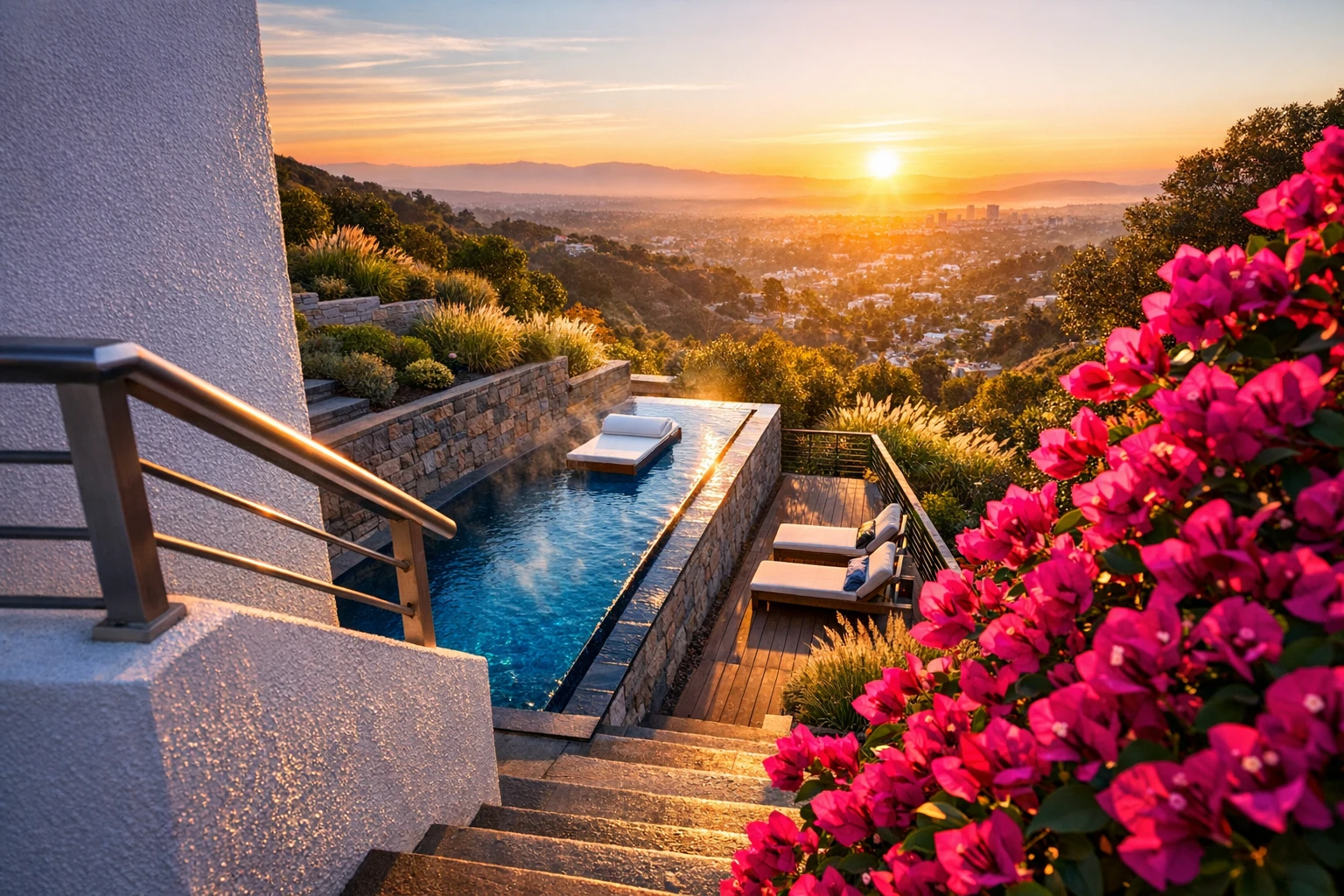
Site type matters just as much as shape. A courtyard pool, for example, may benefit from a raised wall, integrated bench seating, and a finish palette that ties directly into the house. A side-yard pool can turn an overlooked strip of land into a long, linear retreat, especially if fencing, lighting, and paving are handled with restraint. Rooftop pools require a different mindset entirely, because structure, access, waterproofing, wind exposure, and load calculations govern nearly every design move. In all of these cases, space efficiency means solving the site’s limitations instead of pretending they do not exist.
Several design strategies consistently improve results on small plots: • keep the geometry simple so the surrounding space remains usable; • reduce the number of finish materials to create visual calm; • integrate seating into the pool shell or adjacent walls; • use one strong focal point, such as a waterline tile or raised spillway, instead of many small features competing for attention; • choose landscape planting that softens edges without overcrowding the perimeter. These moves do more than save inches. They make the entire setting feel intentional.
Depth is another area where homeowners often overestimate what they need. In compact pools, a shallower profile frequently improves comfort, safety, heating speed, and social use. A pool built mostly for sitting, soaking, and casual play does not need a deep end. On the other hand, if exercise is the priority, a narrow lap pool or a current pool can provide genuine functionality in surprisingly little space. A swim-current system may cost more upfront, but it allows continuous swimming without requiring a long basin. That can be a smart trade when land values are high or lot dimensions are fixed.
Visual tricks also matter. Aligning the pool edge with the main interior view of the house can make the yard feel larger. Running the paving in a single direction helps the eye travel across the site. Using lighter finishes may brighten enclosed spaces, while darker water surfaces can add a mirror-like calm in minimalist courtyards. In the best small-pool designs, every line has a job. Nothing feels accidental. The result is a space that works almost like a well-designed room outdoors: compact, yes, but balanced, comfortable, and far more spacious in feeling than its measurements might suggest.
3. Planning, Materials, and Installation: The Practical Side of Building Small
A space-efficient pool may look simple when complete, yet the planning behind it is rarely simple at all. Small footprints often come with tight setbacks, restricted equipment locations, difficult access for machinery, or nearby structures that limit excavation. Before any design is finalized, homeowners should confirm local rules covering fencing, drainage, utility clearance, electrical work, and required distances from property lines. Regulations vary widely, and compact sites leave less room for adjustment if a late-stage requirement changes the layout.
Soil conditions and site access deserve special attention. A narrow urban lot may require mini-excavation equipment or manual handling of materials, which can increase labor time. Sloped sites may need retaining walls or engineered support. Rooftop and podium installations demand structural review because water is heavy, and the surrounding deck, occupants, and finishes add more load. Even on standard ground-level projects, drainage planning is crucial. Water from rainfall, backwash where applicable, and surrounding hardscape should be directed away from the house and neighboring properties. A small pool that sits in the wrong place can create outsized problems.
Material choice is another major decision. Concrete offers the most freedom in shape, integrated seating, vanishing edges, and custom detailing. It suits unusual sites and high-design projects, but it typically involves longer construction timelines and can carry higher costs. Fiberglass shells can reduce installation time and provide smooth surfaces with predictable factory-made forms, though dimensions are limited by transport and available molds. Vinyl-lined pools can be cost-conscious in some markets, but long-term durability, aesthetic preference, and replacement schedules should be discussed early. There is no universal winner here; the best material is the one that suits the site, budget, climate, and expected lifespan.
Equipment planning should be treated as part of the design, not an afterthought tucked behind a shrub. Pumps, filters, heaters, sanitizing systems, and controls need space, ventilation, and service access. Smaller pools often pair well with automation because water chemistry and temperature can change quickly in a lower-volume body of water. A cover, whether manual or automatic, may be one of the smartest additions available. It can reduce heat loss, limit debris, improve safety in some systems, and lower evaporation. On a compact property where the pool sits close to living areas, quieter equipment and thoughtful placement also matter for day-to-day comfort.
One of the most useful comparisons a homeowner can make is between “small and basic” versus “small and complete.” A stripped-down pool may save money at first, but if it lacks heating, lighting, seating, or a sensible circulation layout, it may be used less often. A carefully specified compact pool can outperform a larger but less coherent installation. Think of it like designing a galley kitchen or a studio apartment: precision is what makes limited space enjoyable. When builders, designers, and owners agree on priorities from the beginning, the finished pool is more likely to feel polished, durable, and genuinely suited to the home.
4. Costs, Maintenance, and Efficiency: What Homeowners Should Expect
One reason space-efficient pools are appealing is the assumption that smaller automatically means cheap. That assumption is only partly true. A compact pool usually uses less water and often requires less excavation, finishing material, and chemical input than a large pool. However, cost per square meter can be surprisingly high when the project includes premium finishes, tight access, custom engineering, heating, current systems, or integrated landscaping. In other words, a small pool can be economical, but it can also become a boutique project with a boutique price tag.
It helps to separate costs into categories. Initial expenses typically include design, permits, excavation, shell construction, waterproofing where relevant, coping, interior finish, equipment, electrical work, fencing, and surrounding hardscape. Then there are the “quiet costs” that people notice later: utility use, service visits, cover replacement, resurfacing over time, winterization in cold climates, and repairs to pumps or heaters. A smaller vessel generally reduces ongoing costs, especially for heating and chemical balancing, but it does not erase them. Water still needs circulation, sanitation, and monitoring.
Some of the most important cost drivers are easy to overlook: • site access, because difficult delivery routes raise labor time; • soil and structural complexity, because unstable ground or rooftop builds require engineering; • heating expectations, because warm water is more expensive to maintain than ambient water; • finish selections, because tile, stone, and custom edges add up quickly; • automation and covers, because they increase upfront spending while often reducing long-term hassle. Looking at the full lifecycle cost is much wiser than comparing construction quotes alone.
Maintenance is often easier with a compact pool, but it can also be less forgiving. Because the water volume is lower, chemistry can shift faster after heavy use, high heat, rainfall, or debris loads. That means regular testing remains important. Owners choosing saltwater systems should understand that these setups still create chlorine; they simply generate it differently. For many households, the real maintenance advantage of a small pool comes from less surface area to skim, shorter vacuuming time, and quicker heating recovery when a good cover is used.
Efficiency depends on design choices more than size alone. A poorly insulated or constantly uncovered compact pool can waste energy just as surely as a large one. By contrast, a thoughtful setup may include a variable-speed pump, efficient heater sizing, smart scheduling, LED lighting, and a cover that reduces evaporation. Landscaping can help too. Wind exposure increases heat loss, so walls, screens, and planting may improve comfort while lowering energy demand. The broad lesson is simple: small pools reward precision. When equipment, use patterns, and climate are matched well, they can deliver strong enjoyment with a more manageable operating burden than many traditional installations.
5. Who Should Choose a Space-Efficient Pool? Final Guidance for Buyers and Homeowners
Space-efficient pools are especially attractive to homeowners who want the emotional and lifestyle benefits of a pool without surrendering the entire yard. That includes urban households, owners of narrow lots, people renovating courtyards, retirees seeking easy upkeep, and buyers who value a stylish outdoor retreat more than competitive swimming space. They can also suit vacation homes and properties where entertaining happens in smaller groups. For these users, a compact pool often feels aligned with real habits. It supports relaxation, conversation, and short dips after a long day, rather than serving as a rarely used monument to excess.
That said, not every household should force a pool into a limited site. Families expecting constant rough play, diving, or multiple simultaneous activities may find a very small pool frustrating. Serious swimmers may be better served by a true lap pool, a current pool, or membership in a nearby aquatic facility if the property cannot accommodate the right dimensions. Likewise, homeowners focused purely on resale should be cautious about assuming any pool adds universal value. Market response depends on climate, neighborhood norms, maintenance expectations, and the quality of the design. A compact pool that looks integrated and practical is more persuasive than one that seems squeezed into leftover space.
For the right audience, however, the benefits are compelling. A well-planned small pool can anchor the entire landscape, making a modest yard feel finished and lived in. It can pair beautifully with an outdoor shower, built-in bench, fire feature, or dining terrace. Even a limited water surface changes the atmosphere of a home. Sunlight dances differently, evening reflections soften hard edges, and the sound of a modest spillway can mask traffic or neighboring noise. The effect is subtle but powerful, rather like adding a calm center of gravity to the property.
Homeowners who want the biggest return from a compact pool should focus on a few practical priorities: • define the primary use before discussing shape or finishes; • protect circulation space around the water so the yard still works as a yard; • invest in comfort features such as steps, benches, shade, and a cover; • keep the palette disciplined so the site feels larger; • choose equipment that matches actual use instead of headline features. These decisions often matter more than adding another decorative element.
In summary, a space-efficient pool is best for readers who value intentional living, strong design, and manageable ownership. If your property is small, irregular, or highly visible from the house, a compact pool may actually serve you better than a larger one by preserving balance between water, architecture, and daily use. The smartest approach is to begin with honest priorities, consult experienced local professionals, and treat the project as part of the whole landscape rather than an isolated object. Done well, a small pool does not feel like less. It feels like enough, shaped with care.