How Prefab Pools Make Installation Easier
Prefab pools have moved from niche product to mainstream backyard upgrade because homeowners want faster builds, clearer budgets, and less disruption. Instead of weeks of wet trades, curing time, and on-site guesswork, many prefabricated systems arrive largely engineered and ready for assembly. That matters in a market where labor costs are high and outdoor space is expected to work harder than ever. Understanding how these pools are made, installed, and maintained helps buyers decide whether convenience truly matches their long-term plans.
Outline
- What prefab pools are and how the main types differ
- Why prefabrication can make installation faster and less stressful
- What buyers should know about costs, timelines, and site conditions
- How prefab options compare on design, comfort, and upkeep
- How to choose the right system for your property and goals
What Counts as a Prefab Pool?
The term prefab pool sounds simple, but it covers several different products. In broad terms, a prefab pool is built mostly in a factory rather than being formed entirely on site. That can mean a one-piece fiberglass shell, a modular panel system assembled in the yard, or a pre-engineered plunge pool that arrives in sections ready to be fitted together. The common thread is this: important parts of the pool are manufactured under controlled conditions before they ever reach your home.
This matters because factory production changes how risk is distributed. With a traditional concrete pool, much more of the process depends on field conditions, trade sequencing, weather, and manual finishing. With prefab construction, more of the technical work is settled earlier. Dimensions, wall structure, plumbing paths, and finish choices are often standardized or semi-customized. That does not make every prefab pool identical, but it does reduce improvisation during construction.
The main categories are worth separating because they behave differently:
-
Fiberglass pools: These are pre-molded shells delivered by truck and lowered into an excavated hole. They are known for quick installation and a smooth interior surface.
-
Panel or vinyl-liner pools: Steel, polymer, or aluminum wall panels are assembled on site, then lined with a vinyl membrane. They offer shape flexibility without full concrete construction.
-
Modular concrete or precast systems: These use manufactured concrete components or pre-engineered shells, blending faster assembly with a more solid structural feel.
-
Prefab plunge pools and compact units: Smaller-format pools are increasingly popular for urban lots, narrow side yards, and buyers who want a cooling pool rather than a lap-length installation.
Each option brings trade-offs. Fiberglass pools are often fastest to set, but transport limits the maximum width and shape. Panel systems can adapt better to unusual layouts, though they require more on-site assembly. Precast or modular concrete options may provide stronger design character, yet they can cost more than simpler kits. The best choice depends on access, budget, climate, and how the pool will actually be used.
It also helps to understand what prefab does not mean. It does not mean “cheap,” “temporary,” or “one size fits all.” A well-made prefab pool can be a permanent, attractive, and high-performing feature. Think of it less as a shortcut and more as a shift in where the work happens. Instead of building everything from scratch in your backyard like a ship in a bottle, much of the precision happens upstream, where tools, molds, and quality checks are easier to control.
Why Installation Is Usually Faster and Simpler
The strongest argument for prefab pools is not that they eliminate work, but that they organize it more efficiently. A pool project still needs planning, permits, excavation, equipment, electrical connections, decking, and inspections. What changes is the amount of open-ended construction happening at the site. Because major structural parts arrive pre-made, installers spend less time forming, pouring, waiting, correcting, and revisiting steps that can stretch a project.
For many homeowners, that difference is felt immediately in the calendar. In favorable conditions, a fiberglass shell can often be installed in days once excavation is complete, and some projects move from dig to usable pool within one to three weeks. A panel-based or modular prefab system may take longer, depending on the finish and deck work, but it still commonly beats the pace of full concrete construction. By contrast, custom gunite or shotcrete pools often run eight to twelve weeks or more, especially when weather, subcontractor availability, or complex features enter the picture.
Here is the typical prefab sequence:
-
Site survey, measurements, and permit submission
-
Excavation and base preparation
-
Delivery of the shell or structural components
-
Crane placement or on-site assembly
-
Plumbing, electrical, and filtration hookups
-
Backfilling, coping, surrounding hardscape, and startup
The simplification comes from predictability. Manufacturers usually provide engineering documents, installation specs, and recommended equipment packages. Installers know the shell dimensions in advance. Plumbing penetrations are often pre-planned. Finish quality is more uniform because factory conditions are not dealing with wind, sudden rain, or a rushed crew trying to beat sunset. Fewer unknowns mean fewer awkward phone calls that begin with “we found an issue.”
That said, prefab is not magic. Access can be a major factor. A large shell may require a crane and clear overhead space, while tight urban lots can force a contractor to use smaller modules instead. Soil conditions, groundwater, sloped yards, and local code requirements still matter. Yet even with those realities, prefab systems often spare homeowners the drawn-out rhythm of traditional builds. Instead of hearing concrete saws and compressors for months, many buyers experience the project as a short, intense burst of activity followed by finishing work. For families planning around school breaks, rentals, or summer use, that compressed timeline can be the deciding advantage.
Costs, Timelines, and Site Conditions Buyers Should Price In
One reason prefab pools attract so much interest is the promise of budget clarity. In many cases, that promise is real, but it only holds if buyers look beyond the headline number. The shell or kit price is not the same as the installed project cost. Excavation, base work, drainage, electrical service, fencing, permits, decking, waterline tile, equipment pads, and landscaping can all change the final figure. A prefab pool may be easier to price than a custom concrete build, but it is not immune to site-specific expenses.
In many U.S. markets, small prefab plunge pools may end up around 20,000 to 40,000 dollars installed, depending on access and finish level. Larger fiberglass or modular in-ground pools often fall in the 40,000 to 80,000 dollar range, with premium projects moving higher once patios, heating, automation, lighting, and design upgrades are added. Fully custom concrete pools frequently exceed those figures, particularly when owners want unusual geometry, vanishing edges, or complex retaining structures. Regional labor rates, local code requirements, and material costs can shift all of these numbers noticeably.
Hidden costs often come from the yard rather than the pool itself. Common examples include:
-
Crane rental for limited access properties
-
Tree removal or fence removal for delivery
-
Retaining walls on sloped land
-
Imported fill or drainage corrections in poor soil
-
Electrical panel upgrades for pumps and heaters
-
Required safety fencing, alarms, or code-compliant covers
Site suitability deserves serious attention before a deposit is paid. A fiberglass shell may need enough width for transport and lifting. A narrow gate, low power lines, mature trees, or a steep descent into the yard can change the entire construction plan. High groundwater may require special anchoring or drainage measures. Freeze-thaw climates can affect deck detailing and winterization plans. Even the position of underground utilities matters; relocating lines is never the fun surprise in a pool budget.
Timelines also need realism. Manufacturers may quote production lead times of several weeks or months during busy seasons. Permitting can easily outlast fabrication. Weather still affects excavation and landscaping. The wise way to approach a prefab pool is to separate the project into three clocks: factory lead time, site preparation time, and finishing time. When all three are understood early, buyers are far less likely to confuse “fast installation” with “instant project.” The result is a plan grounded in actual logistics rather than showroom optimism.
Design, Comfort, and Maintenance Trade-Offs
A prefab pool can save time, but buyers should also ask how it will feel to own one after the excitement of installation fades. This is where the conversation becomes more interesting. Speed is easy to market; long-term satisfaction is more nuanced. The right choice depends on how much you value shape freedom, tactile comfort, cleaning effort, and future repair costs.
Fiberglass pools are often praised for their smooth surface. That finish is pleasant underfoot and can reduce the places where algae readily cling compared with rougher materials. In practical terms, many owners report less brushing and easier routine cleaning. Panel pools with vinyl liners can also feel comfortable and have a softer appearance, though liners typically need replacement after years of use, often somewhere in the seven- to twelve-year range depending on quality, chemistry, and climate. Concrete remains the king of custom form, but it commonly asks for more brushing, more chemistry awareness, and eventual resurfacing over time.
Design flexibility is where prefab becomes a balancing act. You may gain a faster, more predictable project, but give up some freedom in exchange. Transport limitations affect shell width and shape. Built-in benches, tanning ledges, and steps are often predetermined in fiberglass molds. That can actually help some buyers by simplifying decisions, yet others may feel constrained if they want a highly tailored visual statement.
Still, prefab options have become more sophisticated than many people expect. Buyers can often choose among:
-
Integrated spas or spillover features
-
Tanning ledges and bench seating
-
LED lighting packages
-
Saltwater-compatible systems
-
Automatic covers and heating upgrades
-
Coordinated coping and deck finishes
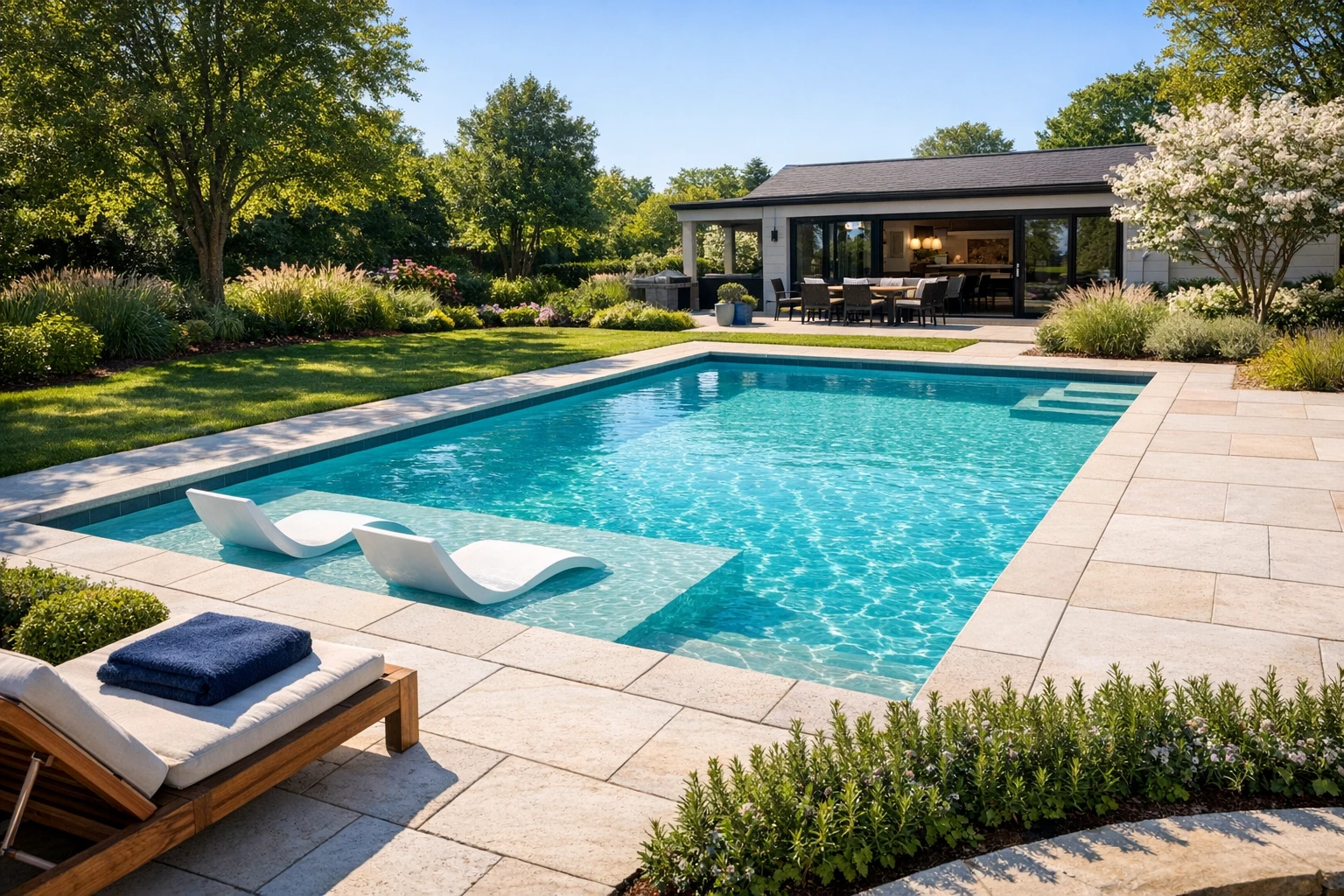
Energy performance can also be part of the equation. Smaller water volume, efficient pumps, thermal covers, and compact forms can reduce heating demand. Some prefab plunge pools are especially attractive to homeowners who want the ritual of water without the operating cost of a large traditional pool. Picture a backyard where the pool is not a sprawling monument, but a crisp, well-proportioned feature that cools the afternoon and catches the evening light. For many properties, that is more useful than a grand design that overwhelms the space. Prefab works best when the pool suits the home rather than trying to outshout it.
How to Choose the Right Prefab Pool for Your Home
Choosing a prefab pool is less about finding the “best” product in the abstract and more about matching a system to real-life priorities. A family that wants a straightforward backyard pool for summer weekends may value reliability and easy maintenance above all else. A homeowner with a compact lot may care more about footprint and delivery logistics. Someone designing a premium landscape might accept a longer timeline in exchange for stronger customization. The right answer changes with the property and the people using it.
A practical starting point is to define the pool’s main job. Is it for children to play in, for quiet exercise, for cooling off after work, or for entertaining guests? That single question can narrow the field quickly. A compact prefab plunge pool may be ideal for relaxation and aesthetics but disappointing for lap swimmers. A fiberglass family pool may be excellent for low-maintenance recreation yet limited if the owner wants a highly original shape that mirrors the architecture of the house.
Before signing a contract, buyers should ask specific questions rather than broad ones. Useful examples include:
-
What is included in the quoted price, and what is excluded?
-
Who handles permits, inspections, and utility coordination?
-
What access width is required for delivery or crane placement?
-
How is groundwater managed if it is present on site?
-
What warranties apply to the shell, finish, equipment, and labor?
-
What maintenance tasks should the owner expect during the first year?
It is also wise to evaluate the installer as carefully as the product. A strong prefab system can still underperform if the base is prepared poorly, the shell is set incorrectly, or the plumbing is rushed. Ask for recent local projects, not just polished photos. Read reviews with a careful eye. The most useful feedback often mentions communication, schedule management, and post-installation support rather than only appearance.
Finally, think beyond installation day. Consider whether the pool equipment is easy to service, whether replacement parts are widely available, and whether the layout leaves room for future improvements such as shade structures, outdoor kitchens, or safer circulation paths. The smartest prefab pool purchase often feels modest at first glance: well sized, well placed, and sensibly equipped. That restraint usually ages better than overbuilding. For homeowners who want an efficient route to a functional, attractive water feature, prefab can be an excellent fit, provided the decision is guided by site realities and not by speed alone.
Conclusion for Homeowners Planning a Backyard Pool
Prefab pools make installation easier because they move a large share of the technical work into controlled manufacturing environments, where quality can be managed more consistently and site labor can be reduced. For homeowners, that often translates into shorter timelines, fewer construction variables, and a project that is simpler to understand from budget to completion. The trade-off is that some systems offer less freedom in shape and detailing than a fully custom concrete build. If your priority is a durable, attractive pool delivered with more predictability and less backyard disruption, prefab deserves serious consideration. The best results come from matching the pool type to your access conditions, usage goals, and long-term maintenance comfort level.