Advantages and Disadvantages of Prefabricated Steel Structure Buildings
Affordable prefab steel buildings have moved from niche industrial shells to practical solutions for farms, workshops, garages, retail spaces, and small commercial sites. Buyers are drawn by faster construction, more predictable pricing, and the chance to add usable square footage without the long delays common in many traditional builds. Yet a low sticker price does not make the decision simple. Real value shows up only when design, insulation, foundations, local codes, and long-term maintenance are understood from the start.
Outline: This article first explains why inexpensive prefab steel buildings are attracting attention. It then examines where the savings usually come from, followed by the long-term performance benefits that make steel appealing beyond price alone. After that, it looks at the disadvantages and hidden costs that can surprise buyers. The final section compares steel with other building methods and closes with practical guidance for property owners, small businesses, farmers, and investors.
1. Why Inexpensive Prefab Steel Buildings Are Attracting So Much Interest
Inexpensive prefab steel buildings have found a wider audience because they answer a simple question many buyers now ask: how can I add enclosed space quickly without turning a straightforward project into a slow, expensive maze? That question matters to homeowners who want a large garage, to farmers who need equipment storage, to small manufacturers looking for a workshop, and to business owners who require a durable shell for inventory or operations. In each case, the attraction is not only steel itself, but the prefabricated approach. Parts are typically engineered in advance, cut and punched in a factory, and then delivered to the site with a plan for assembly. That process reduces guesswork and often shortens the construction timeline.
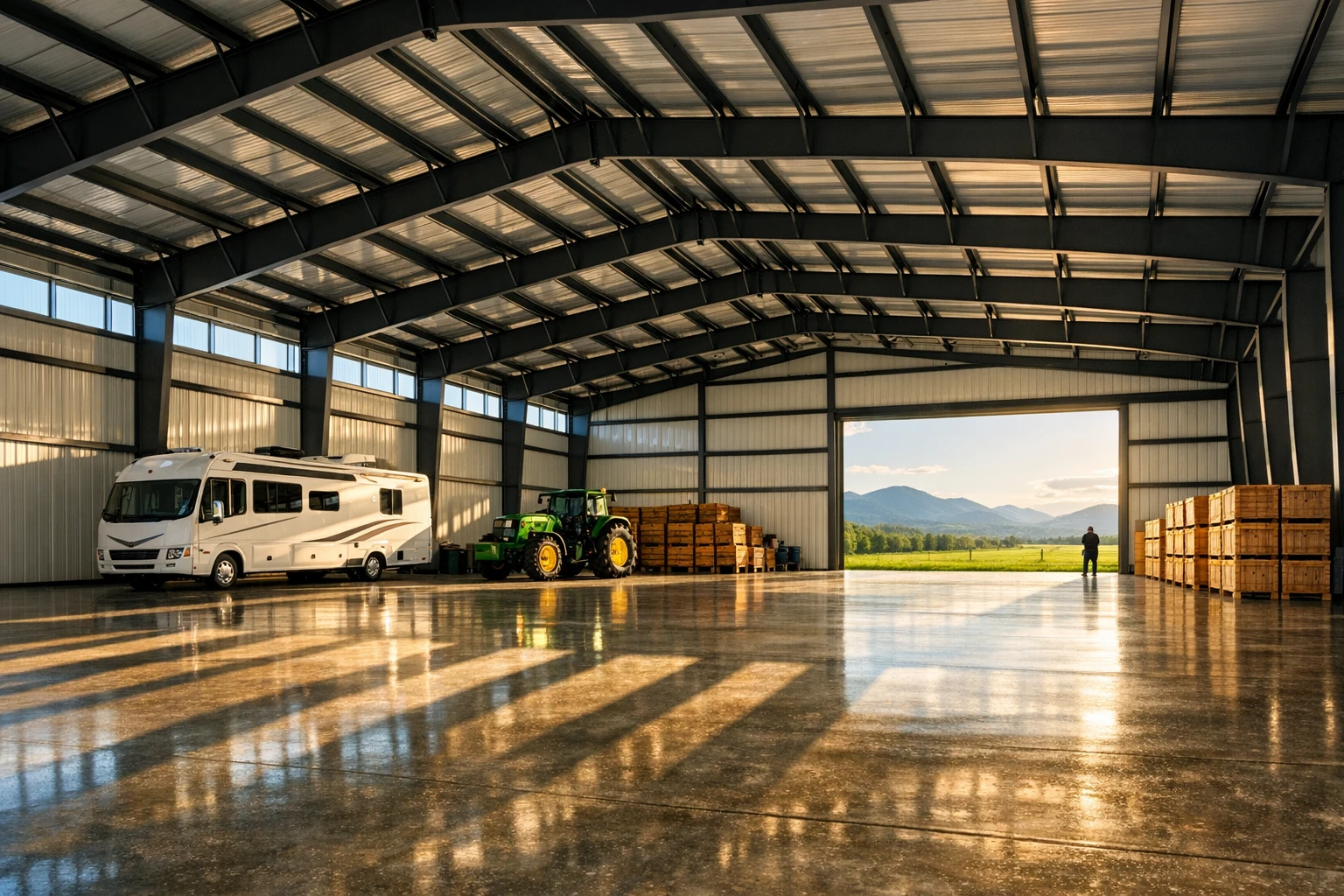
Another reason for the growing interest is versatility. A prefab steel building can be designed for very different needs without changing its basic structural logic. One buyer may want a modest storage building for tools and vehicles, while another may need a high-clearance structure for machinery, RV storage, or a small warehouse. Steel handles wide spans well, which means fewer interior columns and more flexible floor space. In practical terms, that can make a building easier to use and easier to change later.
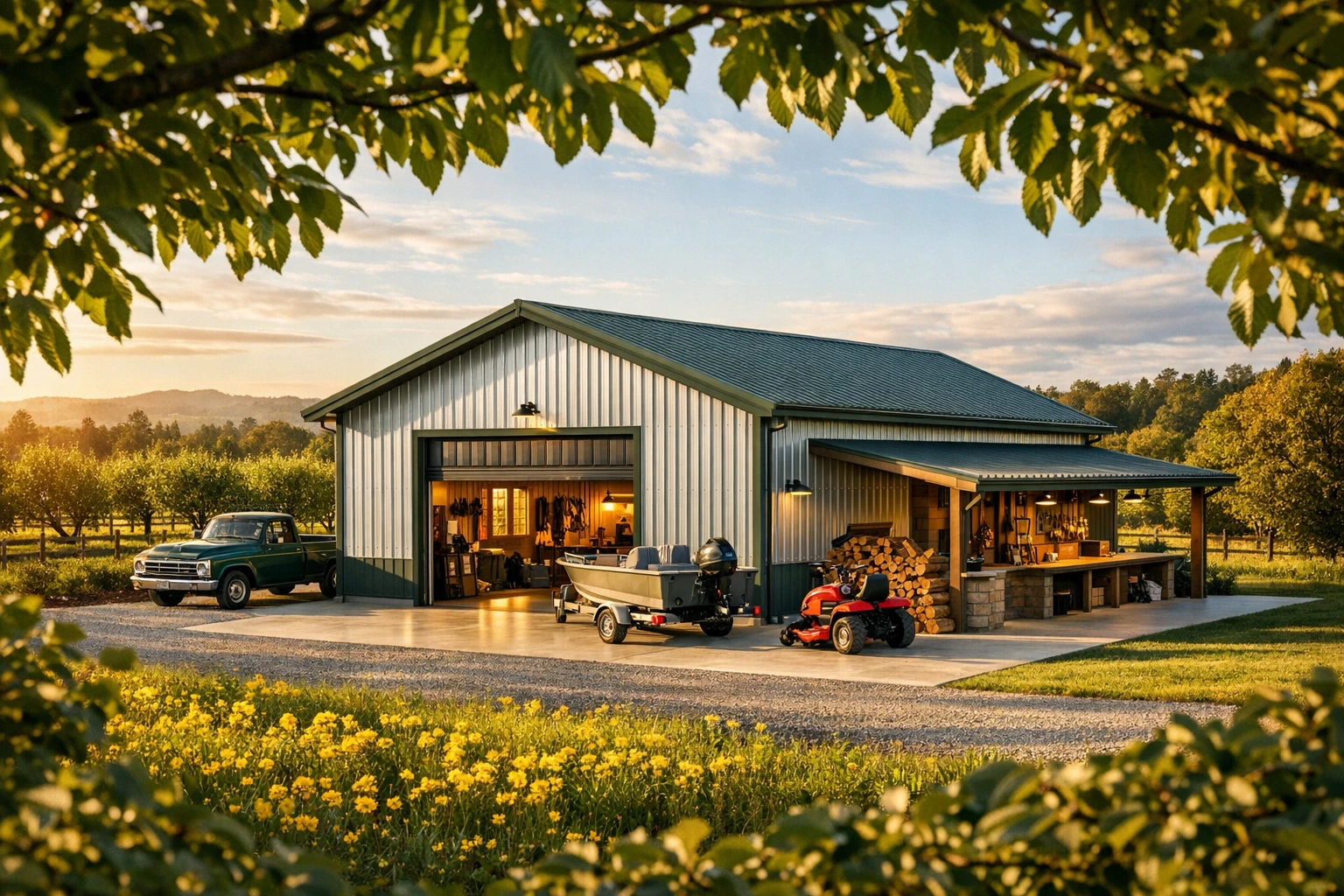
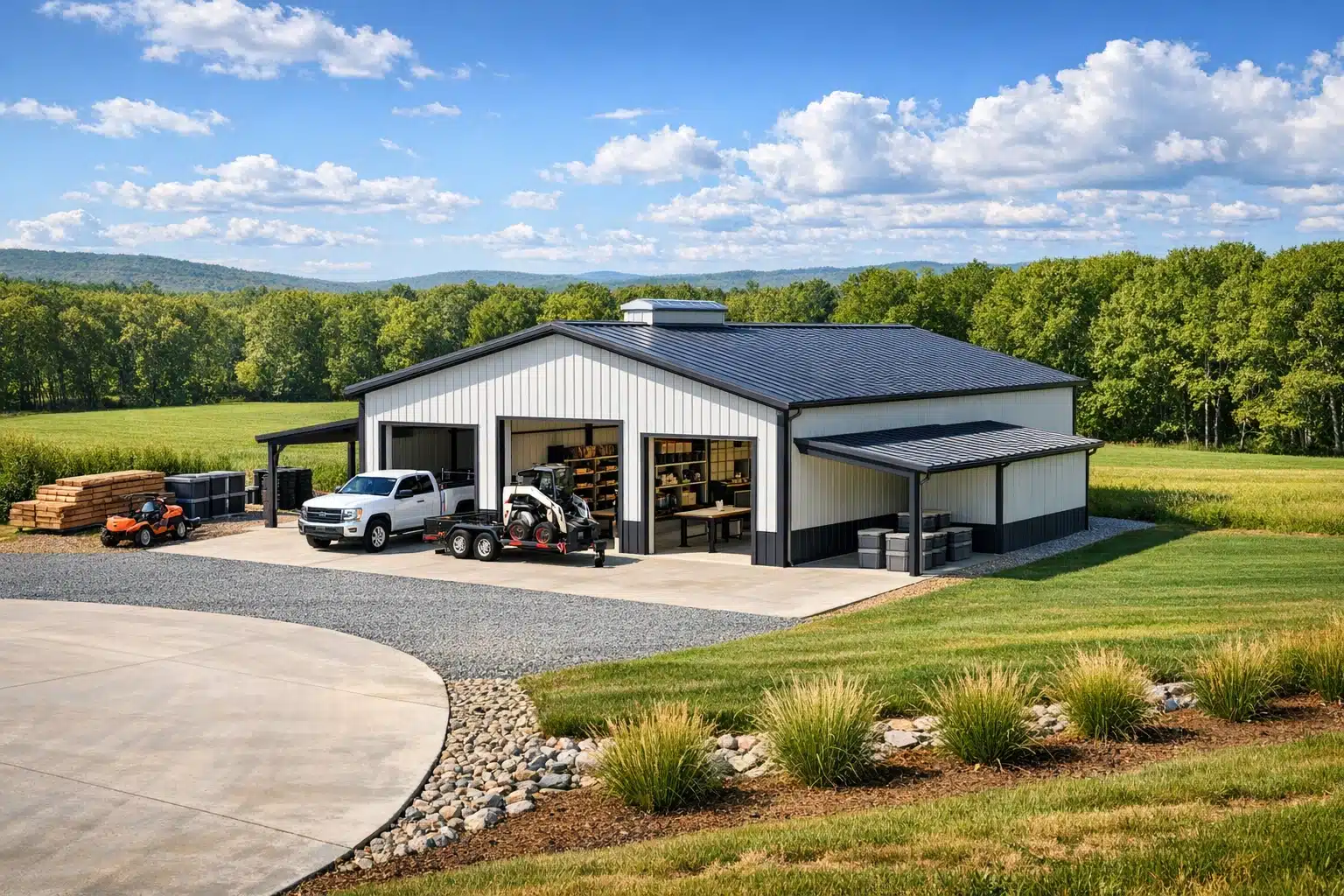
Typical uses include: • backyard garages and workshops • farm equipment sheds and livestock support buildings • warehouses and distribution storage • aircraft hangars and large vehicle enclosures • retail back-end storage or light industrial workspaces
The word inexpensive can be misunderstood, however. It does not automatically mean cheap in quality, nor does it promise that every project will cost less than wood or concrete. What it usually means is that the basic structure benefits from standardization, efficient material use, and faster installation. The savings often come from the system rather than from cutting corners. Steel members are engineered to carry specific loads, and prefab packages are designed to fit together in a rational sequence. It is a little like opening a box of carefully labeled parts instead of starting with a blank sheet and a pile of raw materials.
Economic conditions have also played a role. In periods when labor is expensive, schedules are tight, and delays are costly, a building system that can be quoted, fabricated, shipped, and erected with a more defined process becomes especially appealing. Buyers like predictability almost as much as they like low price. For many projects, prefab steel offers exactly that: not magic, not perfection, but a cleaner path from idea to enclosed space.
2. Where the Cost Savings Really Come From
The affordability of prefab steel buildings usually comes from a combination of engineering efficiency, reduced labor demands, and shorter project timelines. Unlike a fully site-built structure that may involve more cutting, measuring, and adapting in the field, a prefab steel package is typically planned before the first truck arrives. Structural members are produced according to precise specifications, which limits waste and helps crews work faster. This factory-first logic is one of the biggest reasons steel buildings often look economical on paper and remain competitive in real projects.
Labor is one of the clearest areas where savings can appear. Because many steel packages arrive pre-drilled and pre-engineered, erection crews spend less time fabricating structural parts on site. That does not mean the work is simple, but it does mean that fewer surprises can emerge during assembly. Less cutting and reworking usually translates into lower labor hours. When schedules matter, that time reduction can be just as important as a lower material quote. A business opening on time or a farm having storage ready before harvest may value speed as much as price.
Key cost factors that often favor prefab steel include: • standardized structural components • reduced on-site material waste • faster erection compared with many conventional methods • efficient clear-span designs that use space well • easier future expansion in some layouts
That said, buyers should be careful to distinguish between the building kit price and the total installed cost. The steel package itself may look attractively low, but the final budget includes more than frames and panels. Site grading, concrete foundations, anchor bolts, permits, delivery, cranes, insulation, doors, windows, electrical systems, plumbing, and interior finishing can significantly change the real number. Many first-time buyers are surprised to learn that a low-cost shell is only one part of the financial story.
Compared with wood, steel may offer cost advantages in larger structures where clear spans, height, and durability matter. Compared with concrete, it often wins on speed and lower structural weight, which can simplify some aspects of the foundation design. Still, every project depends on local pricing, climate loads, and building use. In a region with high wind or snow requirements, the steel frame may need heavier members, which affects cost. Shipping distance can also matter because long steel components are not free to transport.
The smartest way to evaluate savings is to compare full project scenarios rather than headline numbers. Ask for a clear breakdown. What is included in the package? What remains outside the quote? A steel building can absolutely be inexpensive, but the best deals are the ones where the buyer understands the whole orchestra, not just the sound of the opening violin.
3. Performance Advantages Beyond the Initial Price
If price starts the conversation, performance is what justifies the decision over the long term. One of the strongest advantages of prefabricated steel structure buildings is durability. Steel does not rot, it is not a food source for termites, and it generally handles moisture differently from wood. When properly coated and detailed, it can provide a long service life with relatively modest structural maintenance. For owners who want a building that stays functional year after year, that reliability matters. A structure that saves money upfront but becomes expensive to repair is rarely a good bargain.
Steel also supports practical design benefits. Many prefab systems allow wide clear-span interiors, which reduce or eliminate the need for interior support columns. This is useful in garages, workshops, warehouses, and agricultural buildings where uninterrupted floor space improves movement and storage. Forklifts, tractors, trailers, and inventory all benefit from fewer obstructions. In smaller commercial settings, open floor plans can make layouts easier to adapt as operations change. That flexibility gives steel buildings a second life without requiring major structural alterations.
Important long-term benefits often include: • resistance to pests such as termites • dimensional stability, with less warping or twisting than many wood members • non-combustible structural material • strong capacity for clear spans and tall wall heights • potential recyclability of steel at the end of the building’s life
Another advantage is expandability. Many prefab steel buildings can be designed with future growth in mind. End walls or sidewall systems may allow planned additions, making the initial building a starting point rather than a final limit. This can be valuable for small businesses, agricultural operations, or storage facilities that expect demand to increase. Building in phases may preserve cash flow while keeping long-term options open.
Energy performance is more nuanced, but it can still be a meaningful plus when handled correctly. A steel shell by itself is not automatically energy efficient. However, when paired with proper insulation systems, vapor control, thermal break details, and well-sealed openings, a steel building can perform well in many climates. Roof insulation, insulated wall panels, and reflective finishes can help reduce heat gain or heat loss depending on the application. The crucial point is that efficiency depends on the assembly, not just the frame material.
There is also a sustainability argument worth mentioning. Steel is widely recyclable, and many steel products contain recycled content. That does not make every steel building environmentally superior in every circumstance, but it does mean the material fits well into circular-use thinking. For buyers balancing budget, durability, and long-term adaptability, prefab steel often offers a calm, workmanlike strength. It does not ask for applause; it simply stands there and gets on with the job.
4. Disadvantages, Limitations, and Hidden Costs Buyers Should Not Ignore
Despite their strengths, prefabricated steel buildings come with clear disadvantages that should be understood before a purchase is made. One of the biggest issues is that affordability can fade when buyers underestimate what happens beyond the shell. The structural package may be cost-effective, but foundations, slab work, drainage, utility connections, doors, insulation, and interior finishing can add substantial expense. In some projects, those supporting items narrow the gap between steel and other building methods more than expected.
Insulation and condensation control are especially important. Steel conducts heat efficiently, which means thermal bridging can become a problem if the building envelope is not designed carefully. In cold weather, warm interior air meeting cooler metal surfaces may cause condensation. In hot and humid climates, poor detailing can create moisture problems that affect comfort, stored goods, and long-term performance. Solutions exist, including insulated panels, liner systems, vapor barriers, and well-planned ventilation, but they cost money and must be specified correctly. A bargain building that sweats every morning is not much of a bargain.
Other common limitations include: • more industrial aesthetics unless upgraded with architectural finishes • possible corrosion concerns in coastal or chemically aggressive environments • noise from rain or hail if insulation and acoustic treatment are limited • customization costs that rise quickly beyond standard layouts • zoning, permitting, and design review hurdles in some locations
Appearance can also be a deciding factor. Some buyers love the clean, utilitarian look of steel buildings, while others find it too plain for residential neighborhoods or customer-facing commercial sites. Exterior upgrades such as masonry veneers, canopies, storefront systems, or decorative facades can improve visual appeal, but they increase cost. Once again, the low entry price may apply mainly to the base shell rather than the finished building people actually want.
Another challenge is that not every contractor has equal experience with steel erection. A well-engineered package still needs proper assembly, anchoring, alignment, and weatherproofing. Mistakes in installation can affect the performance of doors, panels, fasteners, and insulation systems. For this reason, buyers should pay attention to both the supplier and the erection team.
Useful questions to ask before signing include: • Does the quote include foundations, delivery, and erection? • What wind and snow loads was the building designed for? • How is condensation control handled? • What warranties apply to panels, paint, and structural components? • Are local code approvals and stamped drawings included?
The main drawback of prefab steel is not that it performs poorly. Rather, it demands disciplined planning. It rewards informed buyers and punishes assumptions. If a project begins with vague expectations and a focus on the lowest visible number, disappointment can arrive quickly. If it begins with a full-scope budget and realistic performance goals, many of these disadvantages can be managed successfully.
5. Comparing Steel With Other Building Methods and Choosing the Right Fit
When deciding whether an inexpensive prefab steel building is the right choice, it helps to compare it with other common construction methods rather than viewing it in isolation. Wood-framed buildings are often attractive for smaller projects because materials can be familiar, local trades may be widely available, and modifications can be straightforward. For certain garages, sheds, or light-use spaces, wood may remain competitive. However, as buildings grow larger, require wider clear spans, or need taller walls, steel frequently becomes more appealing. It can provide open interiors with fewer structural interruptions and often handles large-volume uses more efficiently.
Concrete construction brings a different set of strengths. Concrete can offer excellent mass, durability, and fire resistance, and it may be favored for certain permanent commercial or institutional applications. Yet concrete structures can be slower to build and may involve more complex formwork and curing timelines. In many practical scenarios, prefab steel wins on speed and adaptability. A buyer who needs usable space quickly may value that advantage highly, especially when business activity depends on opening dates or seasonal schedules.
A hybrid approach is also common. Some projects use a steel frame with masonry accents, insulated panels, or a more finished front elevation. This can soften the industrial look while preserving structural efficiency. It is a reminder that choosing steel does not mean choosing a plain metal box unless that is exactly what the project calls for.
For buyers weighing their options, the best decision usually comes from matching the building type to the building purpose: • choose steel when span, speed, durability, and flexibility matter most • consider wood for smaller or more customized low-rise projects with modest spans • look at concrete when mass, permanence, or specific performance requirements justify it • explore hybrid designs when function and appearance need equal attention
For the target audience, the lesson is simple and useful. If you are a property owner needing a garage or storage building, a farmer planning for equipment protection, or a small business owner seeking economical enclosed space, prefab steel deserves serious consideration. It can deliver a strong balance of cost control, speed, and long-term practicality. But the smartest purchase is not the cheapest shell on a sales sheet. It is the building that suits your site, your climate, your code requirements, and your daily use without loading the future with preventable problems.
Conclusion: What Budget-Conscious Buyers Should Remember
Prefabricated steel structure buildings can be an excellent solution for people who need affordable space and clear construction timelines. Their advantages are real: efficient engineering, quick assembly, strong durability, flexible interiors, and broad usefulness across residential, agricultural, and commercial projects. Their disadvantages are just as real: insulation complexity, condensation risk, appearance concerns, and the chance that site work and finishing costs will exceed expectations. Buyers who compare total installed cost instead of package price alone usually make better decisions. In the end, inexpensive prefab steel buildings are best viewed not as a shortcut, but as a disciplined building system that can offer impressive value when planned with care.