Cost Factors to Consider for Metal Garage Structures
A low-cost metal garage can do more than shelter a car; it can protect equipment, reduce clutter, and create useful workspace without the expense of a full conventional build. For homeowners, hobbyists, and small operators, that makes it a practical upgrade with broad appeal. The key is knowing which features truly add value and which ones quietly inflate the budget. This article maps the major cost factors so you can compare options with clear eyes and realistic expectations.
Outline: this article first looks at how intended use and building size set the foundation for the budget. It then examines material choices, frame strength, and design details that influence purchase price. After that, it covers land preparation, permits, delivery, and installation costs that buyers often underestimate. The final sections explore upgrades, long-term value, and a practical conclusion for cost-conscious property owners.
1. Defining the Purpose, Size, and Budget Range Before You Shop
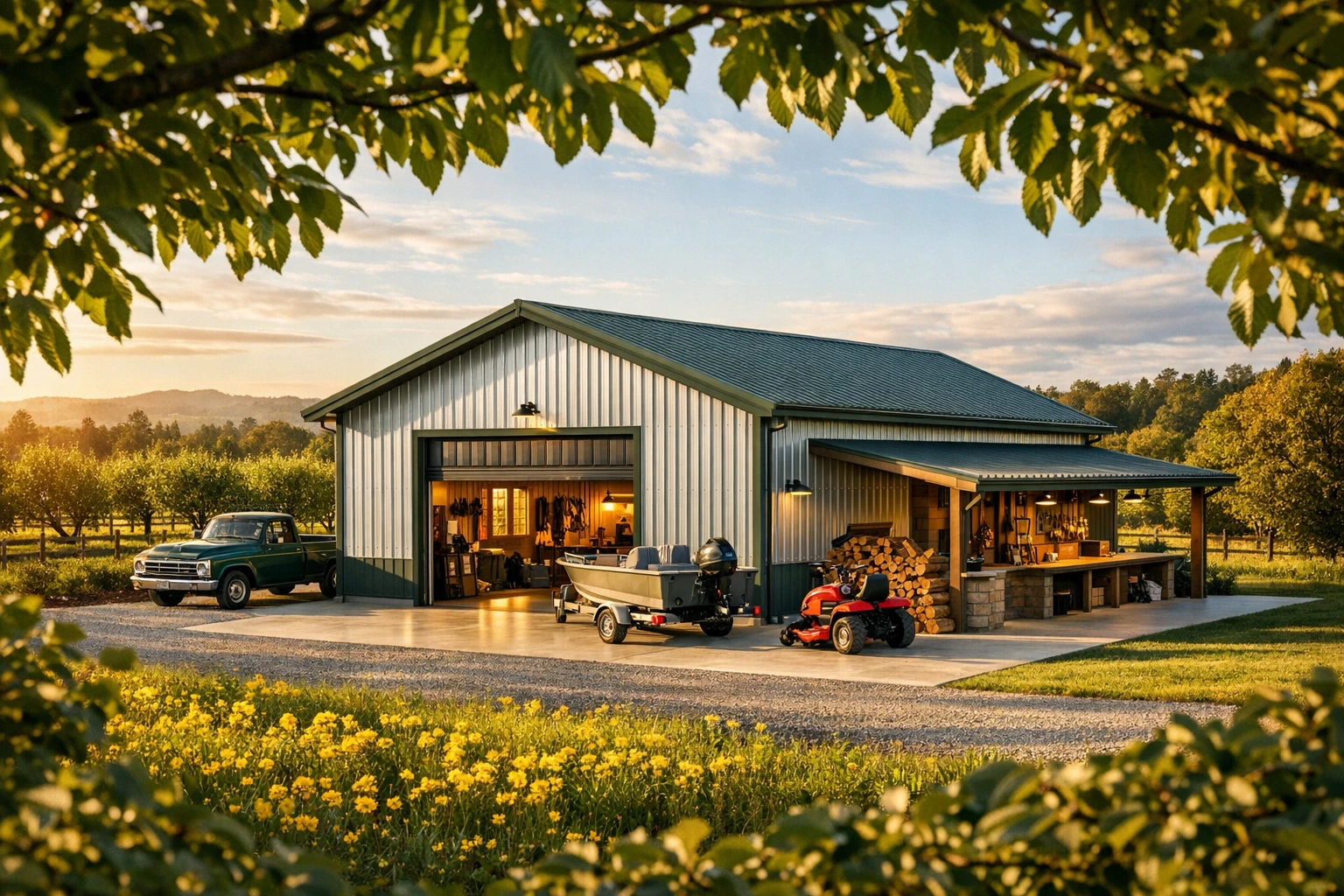
The first and most important cost factor in any metal garage project is not the color of the roof or the style of the trim. It is the purpose of the structure. A building meant for one sedan, a lawn tractor, and a few shelves will sit in a very different price category from a two-bay garage that also needs room for a workbench, seasonal storage, and taller doors for a truck. Buyers often start by comparing advertised prices online, only to discover later that the cheapest structure on the screen is too small, too light, or too limited for what they actually need.
A useful way to begin is by working backward from the items that will live inside the building. A compact single-vehicle unit may start around 12×20 or 18×20 feet, while a more flexible two-car option often lands in the 20×20 to 24×30 range. If the building must house a boat, camper, tractor, or commercial van, ceiling height becomes just as important as floor area. That is where budgets shift quickly. A taller frame uses more steel, larger doors, and often more substantial site work. The structure may still be affordable, but it is no longer directly comparable to a simple residential shell.
At this stage, it helps to sort priorities into clear groups:
- Essential needs: number of vehicles, door clearance, weather protection, and basic security
- Functional extras: storage loft area, work zones, side entry doors, windows, and lighting access
- Future growth: room for another vehicle, equipment, or a workshop extension later on
One practical mistake is buying too little space in pursuit of a lower starting price. A garage that barely fits current needs can become frustrating within a year. On the other hand, buying far beyond present use can tie up money that might be better spent on a stronger frame, improved foundation, or better doors. Think of the building as a tool rather than a trophy. Its value comes from how well it supports daily life.
For budget planning, many buyers separate costs into three layers: the building package, the site and foundation, and the finishing items. This approach brings clarity early. A modest garage shell may look inexpensive, but once you add concrete, anchoring, labor, permit fees, and access for delivery, the real project cost can rise substantially. Starting with a realistic use case keeps the entire decision process grounded. Before comparing quotes, define what the garage must do, how much room it truly needs, and how much flexibility your budget can tolerate without turning a smart purchase into an expensive compromise.
2. Material Quality, Steel Gauge, and Structural Design That Change the Price
Once size and purpose are clear, the next layer of cost comes from what the garage is made of and how it is engineered. Two metal garages may look similar from a distance, yet carry very different prices because their frames, panel thickness, coatings, and roof systems are not the same. This is where buyers need to slow down and read specifications rather than marketing headlines.
One of the most discussed details is steel gauge. In many product lines, a 12-gauge frame is thicker and heavier-duty than a 14-gauge frame, which usually means a higher upfront cost. The same logic applies to sheet metal panels, where lower gauge numbers generally indicate thicker steel. Thicker components can improve rigidity and may be necessary in areas with demanding snow loads or strong winds. Paying extra for a stronger frame is not always overspending; in some climates, it is simply the responsible choice.
Design also matters. A basic regular roof style is often the cheapest option, but it may not perform as well in harsh weather as a vertical roof, which generally sheds rain, debris, and snow more efficiently. Likewise, a fully enclosed garage costs more than a carport-style structure because it uses more material, more framing members, and more finishing components. Boxed eave designs sit between the two in both appearance and cost, giving buyers another point on the value spectrum.
Several details commonly move the price upward:
- Heavier frame gauge for high-wind or high-snow requirements
- Vertical roof orientation instead of horizontal panels
- Galvanized or coated steel for improved corrosion resistance
- Larger roll-up doors, insulated doors, or multiple access points
- Custom color combinations and trim packages
Certifications also affect the total. If a structure is engineered to meet local code for a certain wind speed or snow load, the manufacturer may need to include stronger components, extra bracing, and supporting documentation. That can increase the purchase price, yet it often protects the buyer from much greater costs later. A cheap non-certified building that fails inspection, requires retrofitting, or performs poorly in a storm is rarely cheap in the full sense of the word.
There is also the subtle issue of lifespan. Lower-cost steel buildings can still be a strong value, especially when they use galvanized materials and proper fasteners. However, poorly matched components, thin panels, or limited coatings may lead to rust, panel oil-canning, or more maintenance in exposed environments. The structure may stand, but its appearance and performance can drift downward faster than expected.
In short, material quality is where short-term savings and long-term value meet head-on. A smart buyer does not automatically choose the thickest steel or the most expensive configuration. Instead, they match the build quality to local weather, intended use, and expected ownership period. That balance is what keeps a metal garage affordable without turning it into a false economy.
3. Site Preparation, Foundations, Permits, Delivery, and Installation Costs
If the building package is the visible part of the iceberg, site and setup costs are the mass below the waterline. Many first-time buyers focus heavily on the quoted price of the garage itself, then feel blindsided when the land needs grading, the concrete crew submits a separate estimate, or local authorities require permits and engineered drawings. In practice, these related expenses can consume a large share of the project budget and sometimes approach one-third of the overall spend.
The ground has to be ready before the structure can go up. If the chosen area is uneven, muddy, sloped, or poorly drained, preparation becomes unavoidable. Land clearing, topsoil removal, compacted fill, gravel, and drainage improvements all add cost, yet they are not decorative extras. They support the long-term performance of the building. Water that pools around a garage can shorten slab life, stain panels, and create headaches that no bargain price can erase.
Foundation choice is another major variable. Some small units are installed on gravel pads or asphalt, but many enclosed garages perform best on concrete slabs because slabs provide a stable, clean, and durable surface. Concrete costs differ widely by region, thickness, reinforcement needs, and finish quality. A simple slab for light storage is not priced the same as a reinforced pad for heavier equipment or vehicle lifts. Even when the building kit seems inexpensive, the foundation can rival the price of several premium upgrades.
Other commonly underestimated costs include:
- Building permits and local review fees
- Engineered plans required by county or municipal code
- Delivery charges, especially to rural or hard-to-access properties
- Installation labor if assembly is not included
- Anchoring systems matched to soil, concrete, or asphalt conditions
Labor deserves special attention. Some metal garage packages are marketed as simple to assemble, but real-world conditions are rarely as tidy as an instruction sheet suggests. Wind, site tightness, equipment access, and frame complexity can all affect labor time. If doors, insulation, or custom openings are part of the plan, installation becomes more technical. Skilled crews cost more, yet they also reduce the odds of leaks, misaligned panels, and structural issues.
Permits can feel like paperwork standing in the path of progress, but they exist for practical reasons. Local regulations may dictate setbacks, maximum height, drainage standards, snow-load requirements, or approved anchoring methods. Ignoring those rules can result in fines, delays, or forced modifications. It is far cheaper to confirm requirements before ordering than to fix a noncompliant building after delivery.
The larger lesson is simple: the advertised garage price is only the opening chapter. A true budget should combine the structure, the ground beneath it, the legal path to install it, and the labor that turns steel components into a weather-tight building. Buyers who account for these items early are far more likely to finish on budget and far less likely to encounter those painful “I didn’t realize that was extra” moments.
4. Optional Features, Energy Considerations, and Long-Term Value Compared With Other Garage Types
A metal garage starts as a simple shell in many buyers’ minds, but optional features quickly shape both comfort and total cost. Some upgrades are lifestyle choices, some are practical necessities, and some are worth every dollar only in certain climates or use cases. Understanding this distinction helps buyers avoid paying for features that look attractive on a quote sheet but offer little benefit in daily life.
Insulation is one of the clearest examples. For a garage used only as a basic weather cover in a mild climate, insulation may not be urgent. For a building that doubles as a workshop, stores temperature-sensitive items, or sits in an area with intense summer heat or cold winters, insulation can transform usability. It can reduce condensation, moderate interior temperature swings, and improve comfort during longer work sessions. Still, insulation is not free, and it often triggers related costs such as interior liners, better doors, or ventilation upgrades.
Doors and openings also deserve careful thought. A standard roll-up door is functional, but larger or insulated versions cost more. Adding windows brightens the space and can lower reliance on daytime lighting, yet each opening slightly increases material and installation complexity. Walk-in doors improve convenience, especially if the garage is used frequently, and are often easier on the budget than repeatedly opening a large vehicle bay. Ventilation, ridge vents, and gable vents may be important in humid regions where trapped moisture becomes a problem.
Common upgrade areas include:
- Insulation packages for roof and wall systems
- Windows, skylight panels, or light-transmitting sections
- Additional service doors for daily access
- Ventilation systems to manage moisture and heat
- Interior finishing for workshop or storage use
Long-term value becomes clearer when metal garages are compared with wood-framed alternatives. Wood can offer design flexibility and a traditional look, but it often comes with higher material volatility, susceptibility to rot or insect damage, and more surface maintenance over time. Metal buildings, especially those made from galvanized steel, are often chosen because they are resistant to termites, relatively quick to erect, and simpler to maintain in many conditions. That does not mean metal is always cheaper in every scenario. A highly customized steel structure with extensive concrete work and premium accessories can certainly become a serious investment. Yet for many buyers seeking practical enclosed space, steel remains competitive because the construction process is efficient and maintenance needs are comparatively predictable.
There is also resale and utility value to consider. A well-placed garage can improve property function even if it does not fully recover its cost in appraised value. It can protect vehicles from sun and hail, free up indoor storage space, and support hobbies or side work. In that sense, the structure earns part of its value by making the property more useful day after day. The smartest upgrade strategy is to spend on features that increase function, durability, or comfort in a measurable way, while resisting options that mainly raise the total without solving a real problem.
5. Final Takeaway for Budget-Conscious Buyers
For homeowners, rural property owners, tradespeople, and anyone trying to stretch a building budget without cutting corners, the central lesson is refreshingly straightforward: a low-cost metal garage is not defined by the cheapest sticker price. It is defined by value. The right structure protects what matters, fits the site, meets local code, and avoids costly surprises after purchase. That is a very different thing from simply buying the least expensive package advertised online.
If you are planning a project, begin with a sharp picture of how the building will be used over the next five to ten years. Will it store one vehicle or several? Will it house tools, seasonal equipment, a mower, an ATV, or a workshop bench? Will future needs include a taller truck, a trailer, or expanded storage? Each answer refines the dimensions, door sizes, and roof height that truly make sense. This early clarity keeps you from paying twice: once for a structure that is too small, and again for modifications or replacement later.
As you compare options, focus on a practical checklist:
- Match frame strength and roof design to local weather conditions
- Ask what is included in the quoted price and what is not
- Price the slab, grading, anchoring, permits, and installation separately
- Choose upgrades based on function rather than appearance alone
- Verify code compliance before placing the final order
A good buying process feels less like impulse shopping and more like assembling a puzzle. Each piece matters: size, steel quality, foundation, delivery, labor, and the optional features that turn a basic shell into a useful part of the property. When those pieces fit, the result can be remarkably efficient. You get shelter, storage, and working space in one durable structure, often with less maintenance than many traditional alternatives.
For readers trying to stay disciplined with spending, the best strategy is neither extreme frugality nor unchecked upgrading. It is selective investment. Spend where the building’s performance depends on it, such as structural strength, proper anchoring, drainage, and a suitable foundation. Save where the benefit is mostly cosmetic or unnecessary for your routine. That is how a metal garage remains low-cost in the way that truly matters: affordable to buy, sensible to own, and useful long after the excitement of the purchase has passed.