What to Know Before Choosing an Enclosed Trailer
An enclosed trailer can look like a simple box on wheels, yet the right one can reshape how you haul tools, motorcycles, furniture, inventory, or event gear. It protects cargo from weather, theft, and road grime while giving owners a mobile workspace or rolling storage room. The challenge is that size, axle rating, build quality, and towing demands are closely linked, so a smart choice starts well before a dealership visit. This guide breaks down the key decisions that matter most before you buy.
Outline
1. What an enclosed trailer is and why buyers choose one over an open trailer. 2. How to match dimensions, payload, and layout to your real cargo instead of your guesswork. 3. Which construction materials, axle setups, doors, and add-ons deserve careful comparison. 4. What ownership really costs once towing, maintenance, insurance, and storage enter the picture. 5. How to inspect, compare, and purchase a trailer with fewer risks and better long-term value.
Understanding What an Enclosed Trailer Does Best
An enclosed trailer is built to do more than move cargo from one place to another. Its real value comes from protection, control, and flexibility. Unlike an open trailer, it shields tools, equipment, merchandise, and recreational gear from rain, dust, sun exposure, and casual theft. For contractors, that can mean arriving at a jobsite with dry materials and locked storage. For small business owners, it can mean carrying inventory and branded displays in one organized space. For hobby users, it can mean transporting motorcycles, ATVs, race gear, or antique furniture without feeling like the weather forecast is making the decision for them.
The case for an enclosed unit is strongest when cargo has one or more of these traits: • high value • sensitivity to moisture or dirt • awkward shapes that benefit from wall-mounted storage • a need for overnight security • repeated transport on highways or long distances
That said, an enclosed model is not automatically the better answer for everyone. It usually weighs more than an open trailer of similar footprint, which reduces payload and increases towing demands. Its taller profile also creates more wind resistance, and drivers often notice that headwinds and crosswinds matter more once a box-style trailer is behind the vehicle. In practical terms, that can affect fuel economy, acceleration, braking distance, and overall driving comfort. A weekend homeowner hauling mulch once a season may find an open utility trailer simpler and cheaper. A locksmith, caterer, or mobile detailer may find an enclosed unit indispensable by the second trip.
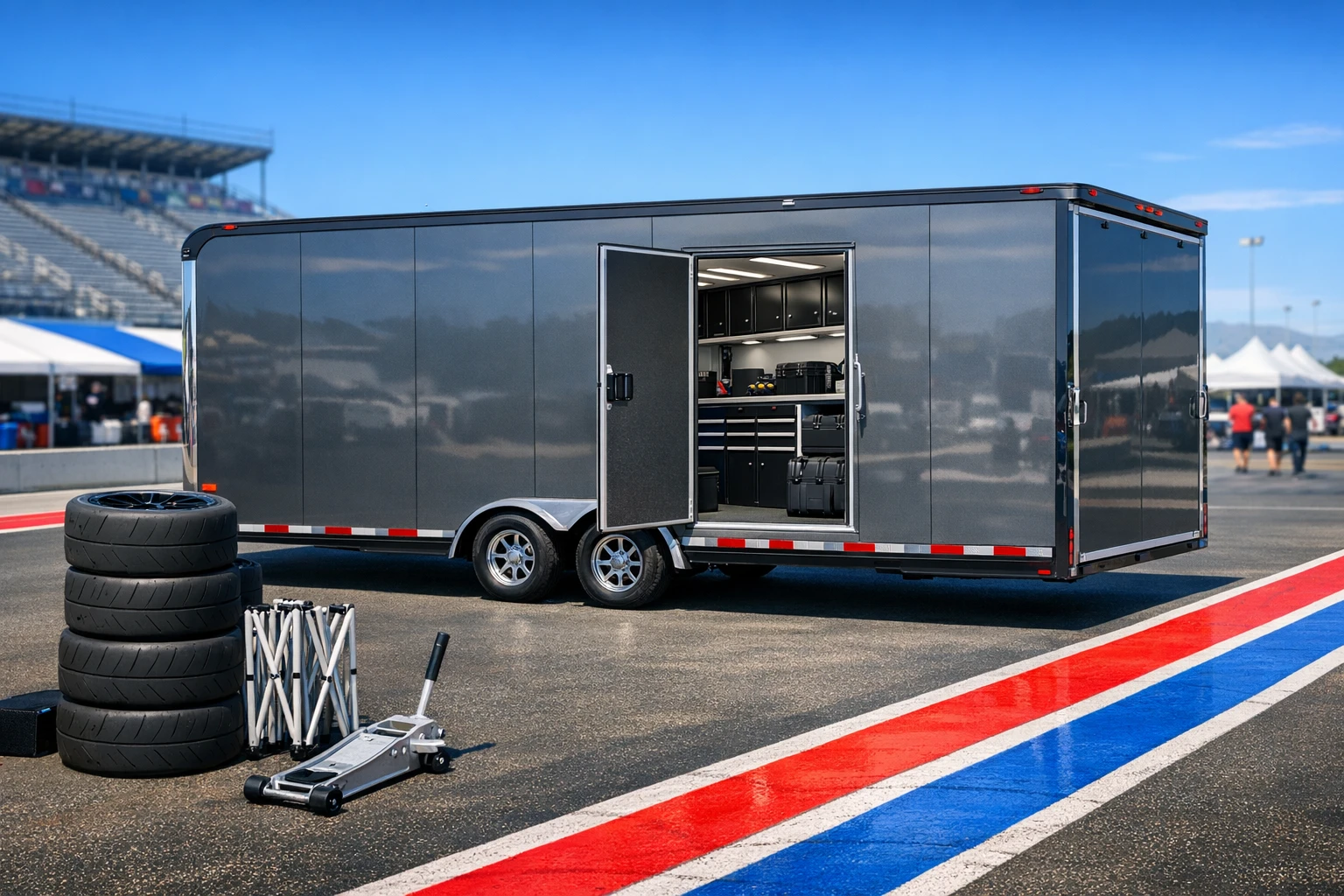
Another advantage is organization. Walls and ceiling structure allow owners to install shelves, cabinets, E-track, D-rings, spare tire mounts, and lighting. What starts as a cargo hauler can become a mobile workshop, a race paddock supply room, a vendor booth, or a compact moving van. That adaptability is one reason enclosed trailers remain popular across industries. They are not glamorous in the way a new truck or boat might be, but they quietly solve problems every mile. Think of one as a traveling garage with a lock on the door: plain at first glance, remarkably useful once the work begins.
Choosing the Right Size, Payload, and Interior Layout
Size is where many trailer purchases go wrong, usually in one of two ways: buyers either choose the smallest box that seems workable today, or they jump to a much larger model without checking what their tow vehicle can actually handle. The right decision starts with numbers, not optimism. You need to know the dimensions and the weight of what you plan to haul, how often you will haul it, and whether loading space around the cargo matters as much as the cargo itself.
Start with the basics. Common widths include 5-foot, 6-foot, 7-foot, and 8.5-foot bodies. Lengths often run from 8 feet to 24 feet or more. Interior height matters too, especially for stand-up use, tall equipment, stacked storage, or side-by-side vehicles. A trailer that is technically long enough can still feel cramped if wheel wells, low roof height, or a steep ramp angle interfere with loading. Buyers moving motorcycles may need room to walk around tie-down points. A business carrying shelving may care more about wall height and straight interior lines than raw floor length.
Weight ratings are even more important than dimensions. Key terms include: • GVWR: the maximum allowed weight of the loaded trailer • empty weight: what the trailer weighs before cargo • payload capacity: how much cargo the trailer can carry • tongue weight: the downward force placed on the hitch, often targeted around 10 to 15 percent of loaded trailer weight
A single-axle 6x12 enclosed trailer might have a GVWR around 2,990 to 3,500 pounds, while tandem-axle 7x16 models often sit around 7,000 pounds, with some commercial setups rated higher. Actual payload varies because construction details change the empty weight. An aluminum-framed trailer may leave more room for cargo than a heavier steel-framed equivalent, but exact differences depend on brand, floor thickness, axle choice, and options.
Layout deserves equal attention. Ask yourself whether you need a rear ramp door for rolling equipment, double barn doors for palletized loads, or a side access door to reach tools without unloading the whole trailer. Consider tie-down placement, interior lighting, ventilation, and whether future use could shift. Buying for one lawn mower today and two machines next year is not unusual. The smartest trailer size is often the one that fits current work comfortably and near-term growth realistically, without pushing the tow vehicle beyond its published ratings.
Comparing Materials, Axles, Doors, and Practical Features
Once size and payload are clear, construction quality becomes the factor that separates a satisfying purchase from a frustrating one. Two trailers can look similar from ten feet away and behave very differently after a year of weather, vibration, and hard loading. Frame material is one of the first comparisons buyers make. Steel remains common because it is strong, widely repairable, and often cheaper at the time of purchase. Aluminum is attractive because it resists corrosion and can reduce overall weight, sometimes by several hundred pounds depending on trailer size and design. That weight savings can improve usable payload, but aluminum models often cost more upfront. The best choice depends on climate, intended use, maintenance habits, and budget.
Axle configuration also matters. Single-axle trailers are simpler, lighter, and cheaper, making them popular for lighter-duty hauling. Tandem-axle trailers generally offer higher capacity, improved load distribution, and a steadier feel on the road, especially with heavier or longer cargo. Many tandem setups include electric brakes, which are valuable for stopping control and are required by law above certain weights in many jurisdictions. Suspension type may be leaf spring or torsion. Leaf spring systems are common and serviceable, while torsion axles can provide a smoother ride and lower profile in some applications.
Door choice can change daily usability more than many buyers expect: • Ramp doors are ideal for motorcycles, mowers, carts, and wheeled equipment. • Barn doors can be easier when loading docks or forklifts are involved. • Side doors save time when you need a tool bag, spare parts, or paperwork near the front. • V-nose designs may improve front storage and can slightly help airflow, though gains vary by vehicle and speed.
Then come the details that make a trailer feel thoughtfully built. Look at wall fasteners, roof seams, floor thickness, tie-down reinforcement, and the gauge of exterior skin. Check whether wiring is protected, whether LED lighting is standard, and whether the roof has a one-piece design or well-sealed joints. Interior plywood thickness, ramp spring assistance, stabilizer jacks, roof vents, ladder racks, blackout packages, and finished walls can all be worthwhile, but only if they fit the job. A mobile contractor may need shelves, ladder storage, and extra side lighting. A motorsports user may prioritize cabinets, insulation, and escape doors. A vendor may care most about clean interior walls and power readiness. In other words, the best feature list is not the longest one; it is the one that removes friction from how you actually work.
Looking Beyond Price: Towing, Maintenance, and Long-Term Cost
The sticker price is only the opening number in the cost of owning an enclosed trailer. A budget-minded buyer can save money upfront and still overspend later if towing efficiency, maintenance needs, insurance, and storage were not part of the original calculation. This is where a practical purchase becomes a strategic one. Think of the trailer not as a single expense, but as a system connected to your vehicle, your schedule, and your tolerance for upkeep.
Towing is the first ongoing cost many new owners underestimate. Enclosed trailers create more aerodynamic drag than open trailers, and that shows up quickly on the highway. Fuel economy often drops, sometimes modestly and sometimes significantly, depending on trailer size, tow vehicle, speed, terrain, and weather. A half-ton pickup that feels strong on paper can work much harder in steady crosswinds with a tall box behind it. This is why published tow ratings are only part of the story. You also need to watch payload, hitch capacity, gross combined weight rating, and how comfortably the vehicle can manage braking and stability in real driving conditions.
Maintenance is straightforward but not optional. Owners should routinely inspect: • tire pressure and tire age • wheel bearings and brake function • roof seals and exterior caulking • floor condition, especially near ramp hinges and door openings • lights, wiring, safety chains, and breakaway systems
Many owners service bearings annually or at mileage intervals based on use, and trailers that sit outside benefit from regular seal inspection because water intrusion can quietly damage wood framing and flooring over time. Insurance, registration, taxes, and storage also vary by location and use. A lightly used personal trailer may be inexpensive to insure, while a commercial unit carrying tools or inventory can require more robust coverage. If you do not have secure parking at home, monthly storage can become part of the permanent budget.
Resale value deserves attention too. Well-kept enclosed trailers often hold value better than neglected ones because buyers look closely at rust, leaks, tires, floors, doors, and title status. Popular sizes and practical configurations are usually easier to sell than unusual custom builds made for narrow use cases. Spending slightly more on good brakes, quality tires, corrosion resistance, and a layout people broadly understand can pay back later. In the long run, the least expensive trailer is not always the cheapest one to own.
A Smart Buying Checklist for New and Used Enclosed Trailers
When you finally begin shopping, it helps to move in a deliberate order. Start with the non-negotiables: tow vehicle limits, cargo dimensions, estimated loaded weight, and whether the trailer will serve personal, commercial, or mixed use. Once those answers are fixed, shopping becomes clearer and far less emotional. Without that groundwork, shiny trim, upgraded wheels, and showroom lighting can distract from practical mismatches.
If you are buying new, compare specifications line by line instead of assuming similarly sized trailers are equals. Look at axle rating, brake setup, frame construction, roof style, floor thickness, and included features. Ask whether the listed dry weight is a base figure or the actual weight of the unit on the lot with installed options. Confirm warranty terms and learn what is covered for the structure, axle components, lights, roof, and doors. Dealers should be able to explain these details without hand-waving.
If you are buying used, inspection matters even more. Focus on structural and water-related issues first because cosmetics are often cheaper to fix than hidden damage. Check the roof for sealant quality, the floor for softness, the ramp and side doors for sagging, and the frame for corrosion or poor repairs. Uneven tire wear may suggest axle alignment trouble, overloaded use, or neglected suspension parts. Open and close every latch, inspect the wiring, and verify that the VIN and title match. If the trailer has electric brakes, test them properly. A flashlight and patience can save more money than bargaining skill ever will.
A practical shopping checklist looks like this: • Verify the tow vehicle ratings before visiting sellers. • Measure the cargo, including height and loading angle needs. • Compare GVWR, empty weight, and real payload, not just box size. • Inspect tires, brakes, bearings, lights, roof seams, and flooring. • Decide which options are essential and which are just nice to have. • Price insurance, registration, hitch equipment, and storage in advance.
Most importantly, buy for the job you actually do. A lightly equipped trailer that fits your vehicle, protects your cargo, and loads easily will outperform an oversized model that strains your truck and wastes space. The best purchase often feels a little boring in the showroom because it is so rational. Later, when it tows predictably, stores securely, and works exactly as expected, boring starts to look like wisdom.
Conclusion for Buyers, Business Owners, and Weekend Haulers
If you are choosing an enclosed trailer, the smartest path is to balance protection, payload, construction quality, and total ownership cost rather than chasing the biggest body or the lowest advertised price. Small business owners should pay close attention to organization, security, and daily usability because time lost at every stop becomes expensive over a season. Recreational users should prioritize fit, loading ease, and towing confidence, especially when trips include highways, changing weather, or uneven surfaces. Anyone buying used should inspect for leaks, structural wear, and title accuracy before worrying about cosmetic upgrades. A well-matched trailer becomes a reliable partner that keeps cargo safe, travel predictable, and future tasks easier to manage.